
Last updated November 15, 2026
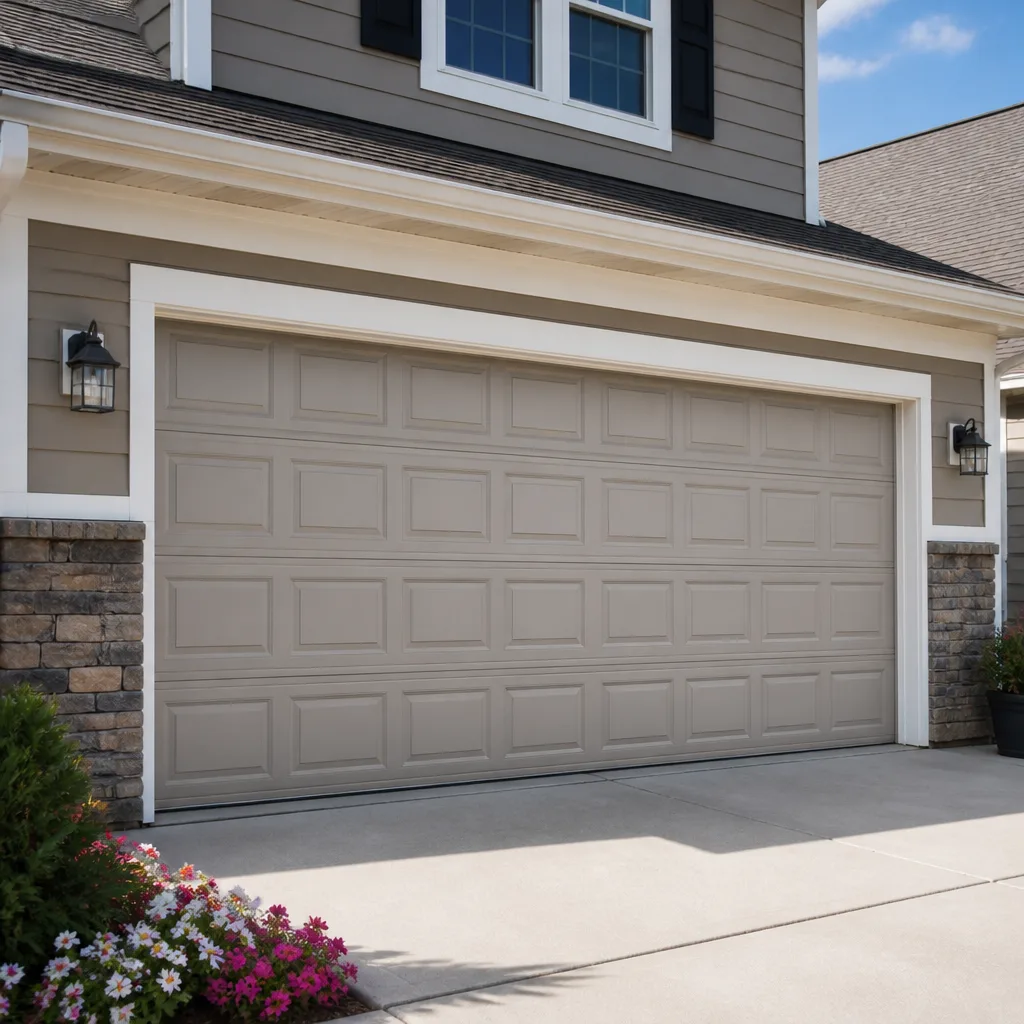 Raised-panel steel
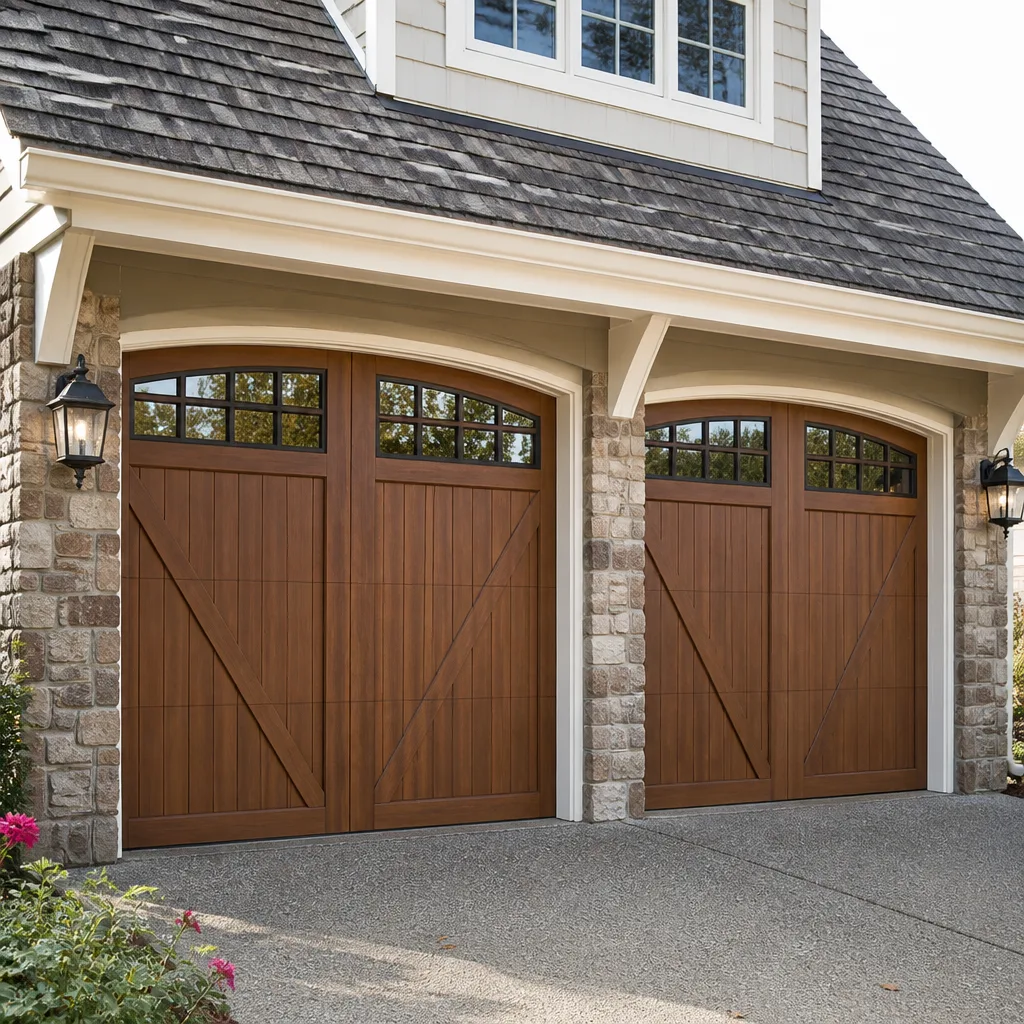 Carriage house
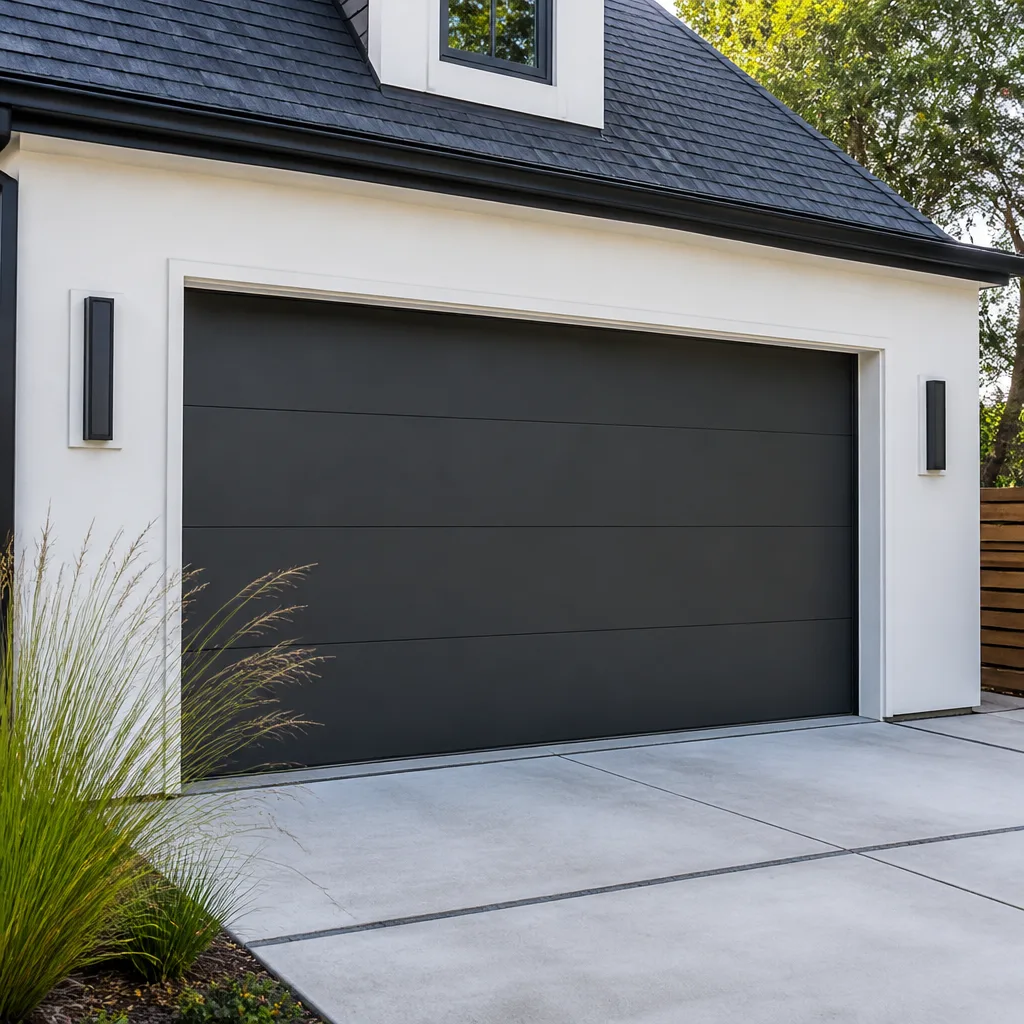 Modern flush
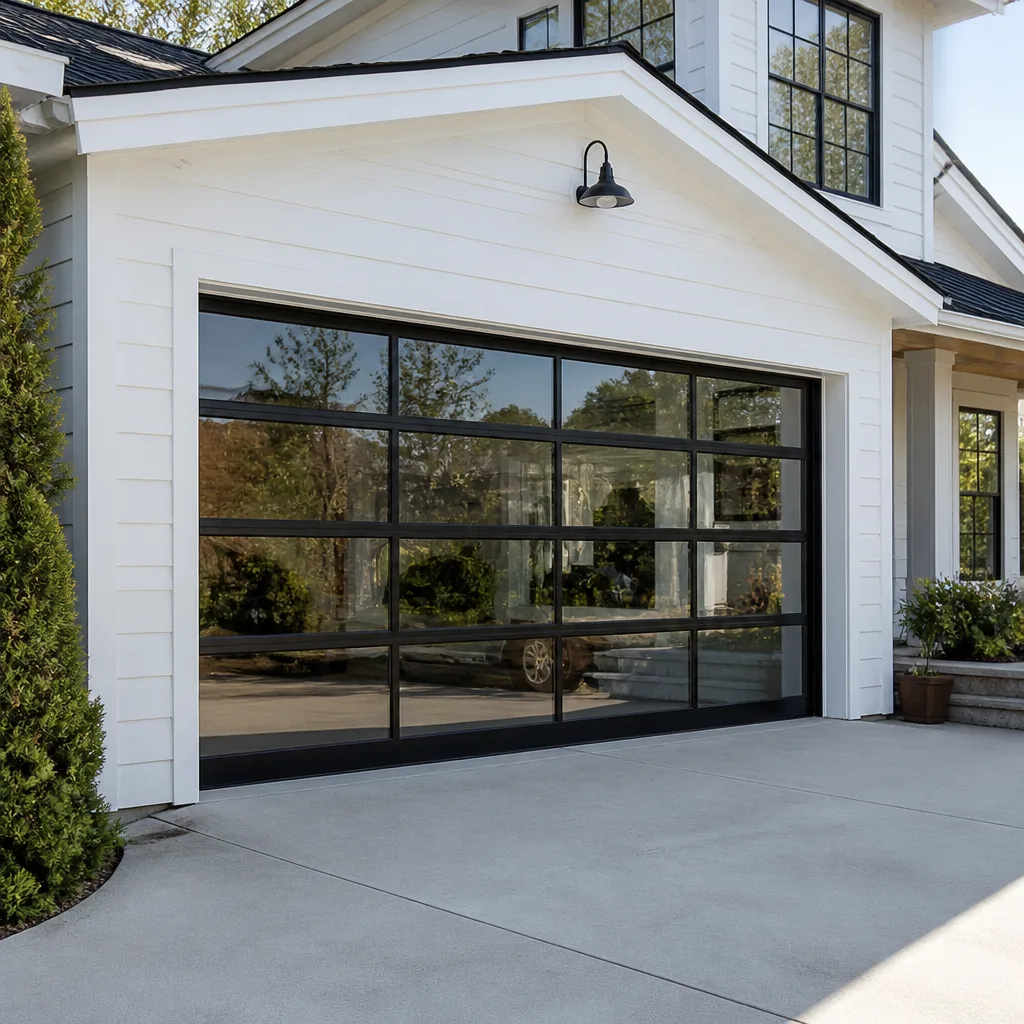 Full-view glass
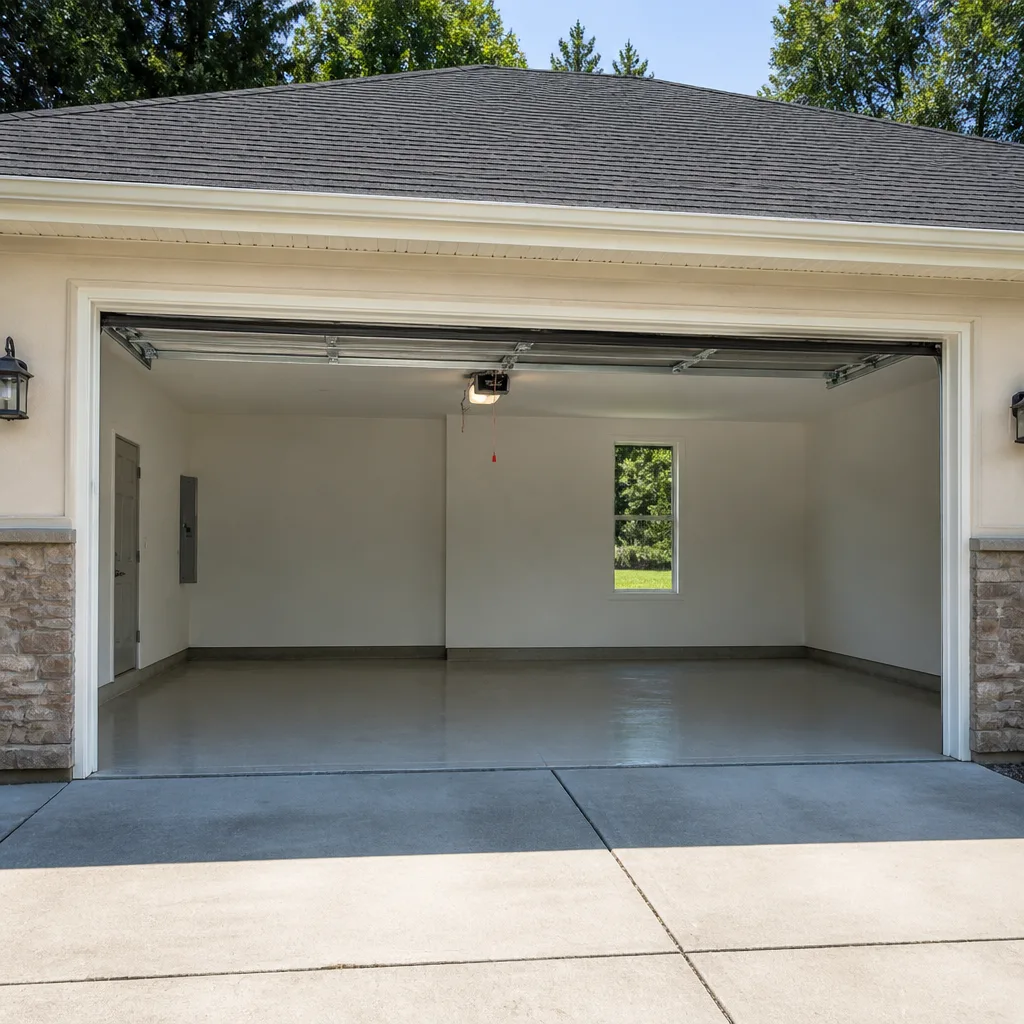 LiftMaster openers
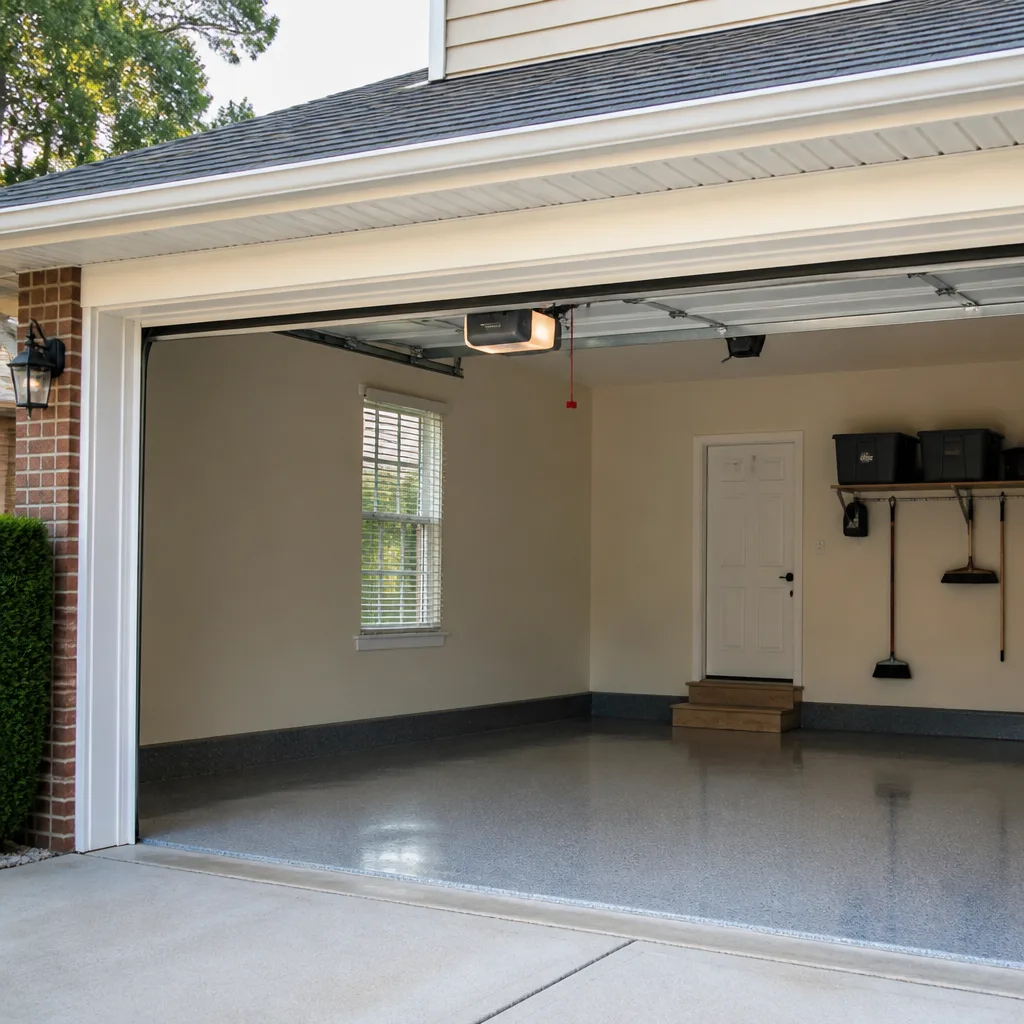 Chamberlain openers
Full 25-point door and opener safety check with every visit - springs, cables, rollers, tracks, and your LiftMaster or Chamberlain opener included
You get a price before we start. It does not change when the pro arrives.
Get your free estimateGarage Door Repair Troubleshooting in Wilmington: Common Problems and How to Fix Them
A garage door that won’t open could be caused by any of eight different failures, and the fix for one can make another worse. Most online troubleshooting guides start with the symptom and send you in circles, because “door won’t close” describes a dozen separate mechanical faults. This guide sorts problems by the system that’s actually failing – springs, cables, tracks, openers, sensors – so you diagnose on the first try. You’ll learn which repairs are safe to handle yourself, which ones can put you in the hospital, and how Wilmington’s humid summers wear down specific parts faster than dry-climate guides ever mention. If you’d rather skip the detective work, Gable Garage Door Repair handles all five systems and every major brand.
Quick Answer
Most garage door problems trace back to five mechanical systems: torsion or extension springs, lift cables, the track and roller assembly, the opener motor and logic board, and the safety sensors. Spring and cable failures are never safe to repair yourself, while sensor alignment, remote reprogramming and lubrication are genuine homeowner jobs. In Wilmington, the wet, salty air speeds up corrosion on springs and cable fraying, so a door that looks fine can fail suddenly after a humid stretch.
Styles & brands we work with
- Raised-panel steel
- Carriage house
- Modern flush
- Full-view glass
- LiftMaster openers
- Chamberlain openers
Table of Contents
- The Five Systems That Cause Almost Every Garage Door Problem
- Spring Problems: The Failure You Should Never Touch
- Cable Problems: Fraying, Slipping and Snapping
- Track and Roller Problems: When the Door Rubs or Sticks
- Opener Problems: Motors, Remotes and Logic Boards
- Sensor Problems: The Most Common Safe Fix
- How to Describe the Problem When You Call
- Common Mistakes to Avoid
- When to Call a Professional
- Frequently Asked Questions
The Five Systems That Cause Almost Every Garage Door Problem
A garage door is not one machine. It’s five separate systems that happen to share a frame, and a fault in any one of them produces symptoms that look identical from the driver’s seat. That’s why a door can be “stuck halfway” because of a snapped spring, a jumped cable, a bent track, a dead opener capacitor, or a misaligned sensor, and each has a completely different fix. Sorting by system first, then by symptom, is how a technician diagnoses in minutes instead of guessing.
Here’s the practical breakdown of what each system does and how it fails:
- Springs carry the door’s weight. Torsion springs sit on a shaft above the door; extension springs run along the sides. When they break, the door becomes dangerously heavy.
- Cables connect the door to the spring system and keep it level. They fray, slip off drums or snap under load.
- Tracks and rollers guide the door. Bent track, worn rollers or loose hinges make the door bind, scrape or stall.
- The opener does the lifting, not the holding. The motor, gear, logic board, remotes and travel limits all sit here.
- Safety sensors sit at the floor at each side of the opening. They stop the door from closing on something in the way.
Every one of the eight brands we service – LiftMaster, Chamberlain, Genie, Clopay, Amarr, Wayne Dalton, Craftsman and Raynor – uses these same five systems, though the parts and quirks differ. A Craftsman opener from the 2000s has a different gear and logic setup than a modern LiftMaster, and a Clopay steel door handles spring tension differently than a Raynor. Knowing the brand tells a technician where to look first. Treating every door as generic hardware is where guesswork starts.
For a full picture of what our garage door repair work covers in Wilmington, the remaining sections walk through each system in the order a technician checks it.
Spring Problems: The Failure You Should Never Touch
Torsion and extension springs are the single most common cause of a garage door that won’t lift, and the single most dangerous part on the entire door. A torsion spring is wound under enormous tension to counterbalance a door that can weigh well over a hundred pounds. When it snaps, it releases that stored energy in an instant. This is not a repair to attempt at home, no matter how many videos you’ve watched.
Here’s what a spring failure looks like from the outside:
- The door opens a foot or two and stops dead, or won’t budge at all.
- You hear a loud bang from the garage, often described as sounding like a gunshot.
- The door feels extremely heavy when you try to lift it by hand (test only with the door closed and the opener disengaged, and stop if it fights you).
- A visible gap in a torsion spring above the door, or an extension spring hanging loose.
In Wilmington, springs fail on a schedule that has less to do with the door’s age and more to do with the air. The humidity here sits high for months at a stretch, and that moisture works its way into the steel coils. Rust pits the wire, and a pitted spring snaps earlier than the same spring would in a dry climate. A door that’s been fine for years can break a spring on the first hot, sticky week of summer. If you notice rust streaking on the spring coils, that’s your warning to have it checked before it fails.
Spring replacement is a job for a trained technician with the right winding bars and the experience to handle the tension safely. Never cut, unwind, adjust or try to “help” a torsion spring yourself. For a closer look at how we handle these jobs, our Wilmington service page lays out the full range. If a spring has already snapped, don’t run the opener – more on why that matters further down. Call (866) 961-8704. We answer 24/7. Fast dispatch from 7am to 7pm, Sunday through Friday.
Cable Problems: Fraying, Slipping and Snapping
Lift cables are the muscle between the spring system and the door, and when one fails the door goes crooked, hangs by a corner, or drops. A snapped or slipped cable is the second most common serious failure after springs, and like springs, it’s not a homeowner repair. The cable is under the same tension as the spring, and a frayed cable can whip loose without warning.
What to watch for:
- The door hangs unevenly, with one side higher than the other.
- You can see frayed strands or a bird’s-nest tangle of wire at the drum above a corner.
- The door jerks or shudders as it moves, especially at the start and stop.
- A cable has come off its drum and is lying slack along the track.
Cables corrode in Wilmington faster than most troubleshooting guides account for. The cable drums and the bottom brackets sit low in the garage, where humid air pools, and the steel strands fray from the inside out where you can’t see them. By the time a strand shows at the surface, the cable is already weakened. During a wet stretch, it’s worth shining a light on both cables and looking for that first sign of fraying. Catching it early is a straightforward replacement. Catching it after it snaps means a crooked door and a bigger job.
Safety note: the bottom brackets that anchor the cables are under extreme tension. Never loosen, tighten or remove the bolts on a bottom bracket, even if the cable looks loose. That bracket can release with lethal force. A trained technician has the tools and the technique to handle it. If you see a slack or snapped cable, keep the door closed if you can, keep people and cars clear, and call for help rather than running the opener. Our team works on cable failures across every brand we carry, from Chamberlain to Raynor, and diagnoses by system rather than symptom.
Track and Roller Problems: When the Door Rubs or Sticks
The track and roller assembly is the part of a garage door system that homeowners can often inspect safely and fix with a few sensible steps. Tracks bend, rollers wear flat, and hinges loosen, and each of those produces a door that scrapes, shudders or refuses to travel smoothly. This is also where a lot of “my door is broken” complaints end up being a five-minute adjustment rather than a repair.
Work through these in order:
- Look at the track line. Stand back and sight along each vertical and horizontal track. A bend or kink is easy to spot and will cause the door to bind.
- Check the rollers. Rollers should spin freely and feel tight in their brackets. A flat-spotted, wobbly or missing roller means the door is dragging on that side.
- Look at the hinges and bolts. A loose hinge lets the door sag, which throws it out of square against the track.
- Test the door balance. With the opener disengaged and the door halfway up, the door should stay put when you let go. If it slides down, the spring tension or balance is off, which is a technician job.
- Lubricate the moving parts. A garage-door-rated lubricant on the hinges, rollers and springs (not the track itself) smooths out a door that’s stiff but otherwise sound.
Track repair has limits. A slight bend can sometimes be straightened by a technician with a proper tool, but a badly kinked track, or a track knocked out of plumb, usually needs replacing. In Wilmington, the seasonal swing between humid summers and cooler winters can shift a wooden door frame enough to pull a track slightly out of line, which shows up as a door that grabs on one side. If a track is bent from an impact, don’t try to force the door past it. For anything beyond a light straightening, or if the door hits something, our garage door opener repair team can check whether the opener got knocked out of alignment too.
Opener Problems: Motors, Remotes and Logic Boards
The opener gets blamed for everything, but a surprising number of “opener failures” are actually a spring, cable or sensor problem the opener is faithfully reporting. Before you replace the motor, sort out which system is really at fault. The test is simple: pull the release cord to disconnect the opener from the door, then try lifting the door by hand. If it’s heavy or won’t move, the door and spring are the problem. If it lifts smoothly by hand but the opener still won’t operate, the trouble is in the opener.
Common opener failures break down like this:
- Remote won’t work: dead batteries, a lost rolling code, or a limit switch out of adjustment.
- Motor hums but the door won’t move: a stripped drive gear or a failed capacitor.
- Door reverses for no reason: a safety sensor problem or a travel limit set wrong.
- Overhead light flickers or stays on: a failing logic board or a bad connection.
- Loud grinding: worn gears, which is the classic failure on older Craftsman and Chamberlain units.
Reprogramming a remote or re-keying a modern opener is genuinely within reach for a homeowner, and the manual walks you through it. Motor, gear and logic board work is not a homeowner job, and there’s a real risk of misdiagnosis – replacing a whole opener when a cheaper fix would have done it. That’s the moment brand knowledge pays off. A LiftMaster with a bad travel limit needs a different approach than a Chamberlain with the same symptom, and knowing which is which is how you avoid a wasted installation. Whether it’s a Craftsman opener that won’t respond or a LiftMaster that reverses halfway down, we diagnose by brand, not by guesswork. If your opener is the problem, call (866) 961-8704 for a free estimate.
Sensor Problems: The Most Common Safe Fix
Safety sensors at the base of the door account for more “door won’t close” complaints than any other single cause, and they’re also the most fixable problem on the whole list. The door goes up fine, then reverses or refuses to come down. If the opener’s light is flashing and the door moves up but not down, sensor trouble is the leading suspect. A technician looks at two sensors, not a whole door.
What you can safely check yourself:
- Look at the small light on each sensor. Each unit has an indicator light. One solid light on each side means they’re talking. A blinking light on either side means the beam is broken or the pair is out of alignment.
- Look for obstructions. A spider web, a leaf, a winter hat or a broom handle across the beam all do it. Clear the lens and the path.
- Check alignment. The two sensors should point at each other across the opening. A light nudge on one, then the other, often brings the lights back. If alignment is stubbornly off, the bracket may have been bumped or bent.
- Check the wiring and power. Sensor wiring runs down the wall to each side. A loose connection at the sensor or the opener terminal stops the door.
Sensors are electronic, and electronic failures happen with humidity and temperature swings, both of which Wilmington sees in abundance. A door that worked fine all winter but reverses on a humid morning is often a sensor that’s just moist enough to interrupt the beam.
Two things are not safe to fiddle with: the sensor wiring if you don’t know what you’re looking at, and bypassing the sensors to “just get it closed.” Never defeat the safety sensors. They’re there to stop the door on a child, a pet or a car. If two aligned, clean sensors still won’t work, the fault is in the wiring or the opener’s logic board, and that’s a call-the-technician moment. Call (866) 961-8704 and we can tell you whether it’s a sensor, a board or something else before anyone comes out.
How to Describe the Problem When You Call
Here’s the single most useful habit in garage door repair: describe what you see and hear, not what you think is wrong. “It’s broken” tells a technician nothing. “It opens about a foot and then stops, and I heard a bang last night” tells them to put a spring job on the schedule before they even pull into your driveway. That one-minute description saves money, because a technician who arrives knowing the likely system doesn’t spend time chasing the wrong one.
The table below pairs what you see with the system it usually points to. Use it to describe the problem accurately when you call:
- Door opens a foot and stops; loud bang: Broken spring.
- Door hangs crooked; frayed wire at a corner: Broken or slipped cable.
- Door scrapes, sticks or binds on one side: Track or roller problem.
- Motor hums or grinds but the door won’t move: Opener gear, capacitor or drive.
- Opener light flashes; door goes up but won’t close: Safety sensor.
- Remote works for one door but not another: Remote programming or limit setting.
- Door reverses immediately as it touches the floor: Travel limit out of adjustment.
- Door won’t stay up; feels very heavy: Spring tension or balance.
When you can describe the symptom, the brand and when it happens, the call becomes a scheduling question instead of a guessing game. In Wilmington, we also ask whether the door is a newer steel unit or an older wooden one, because the standard failure modes differ. If your door has any of the symptoms in the first two rows, keep it closed if you can and keep people clear until a technician sees it.
See the difference
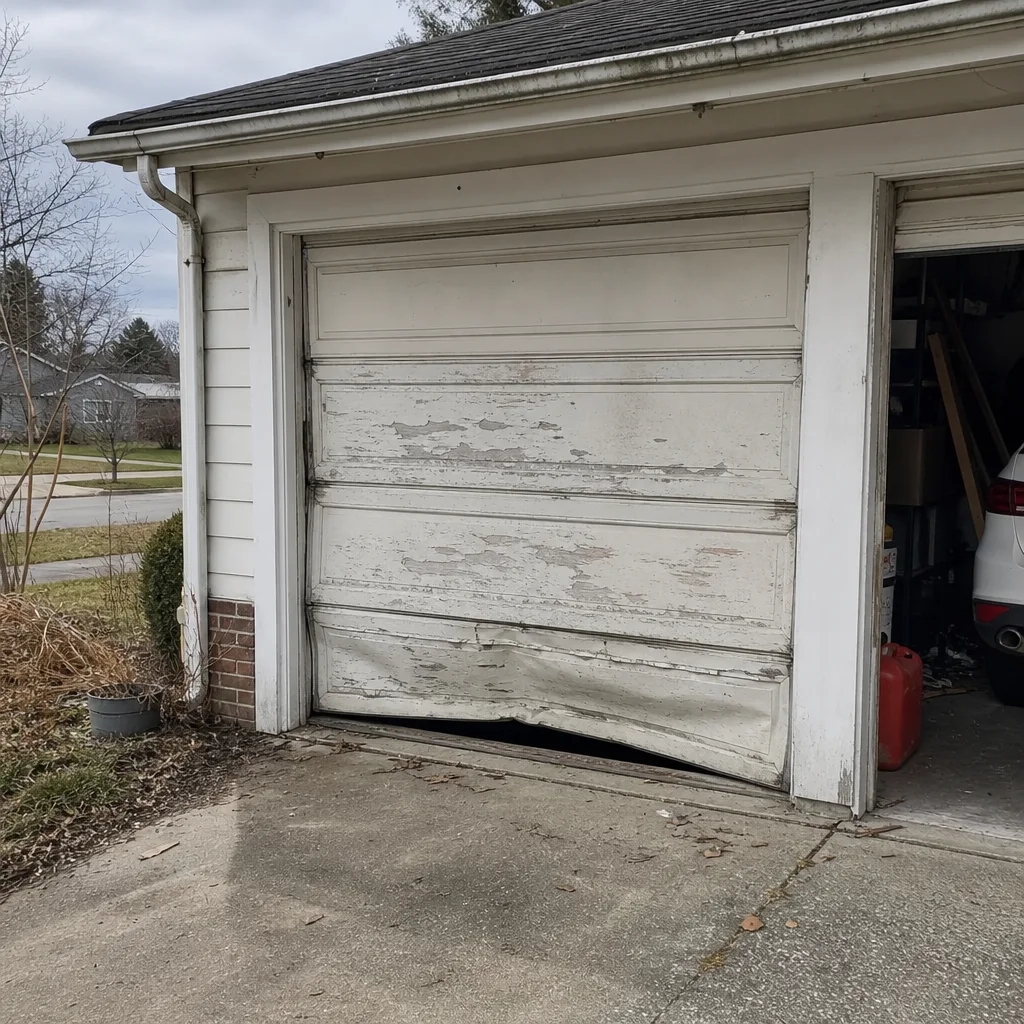 Before
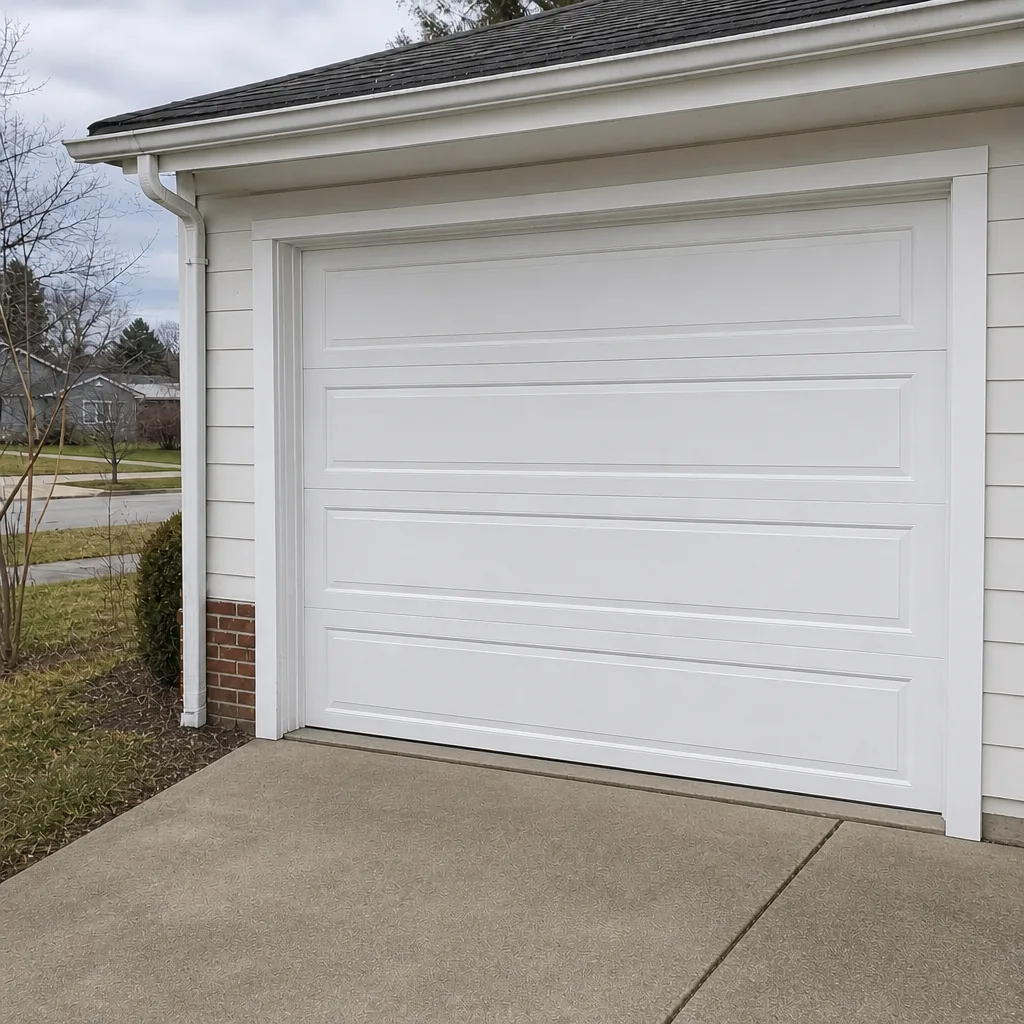 After
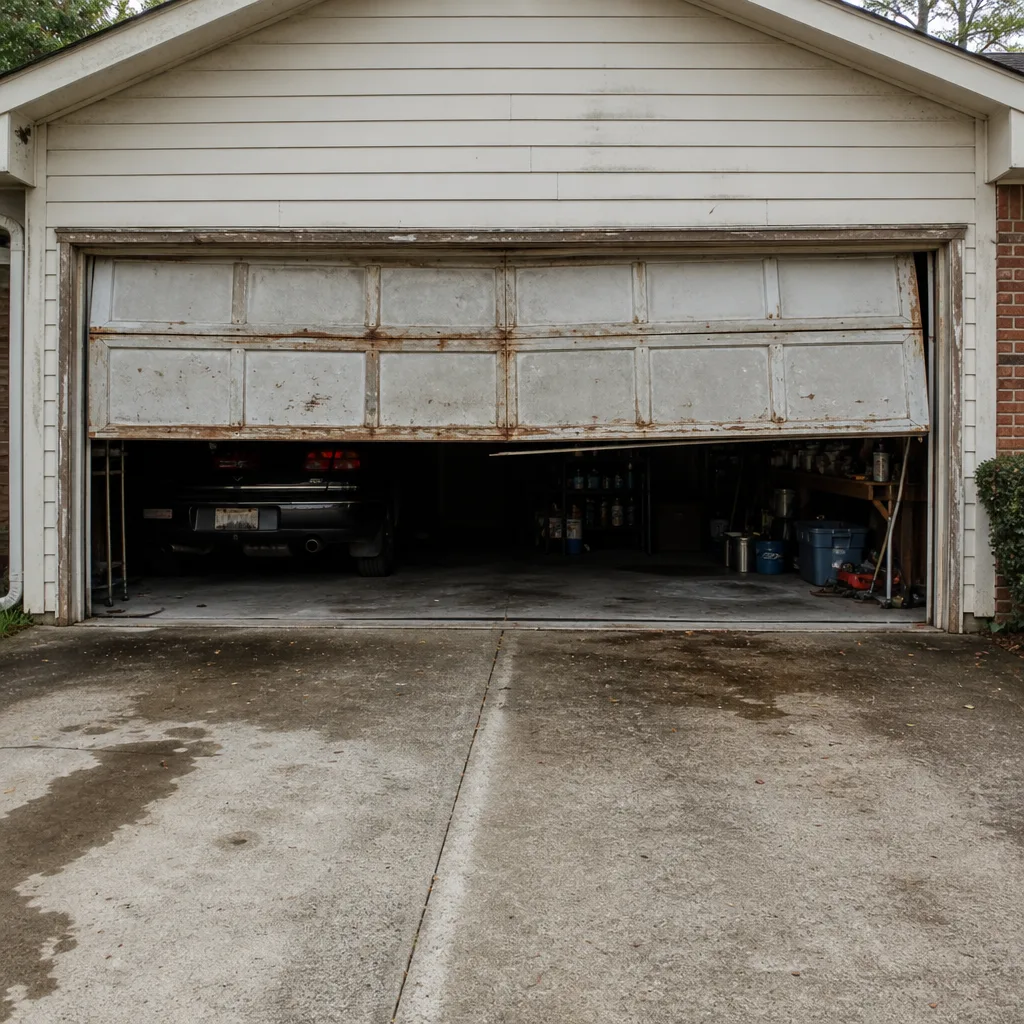 Before
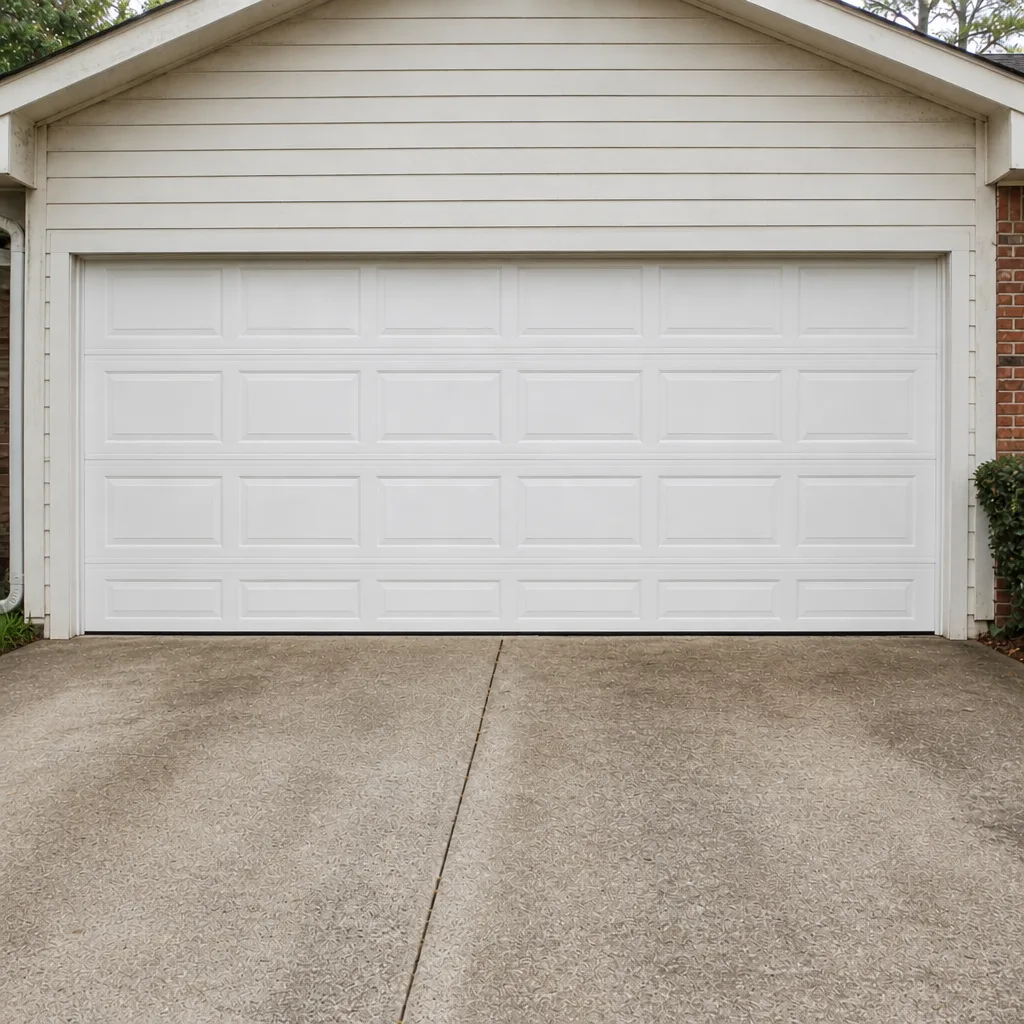 After
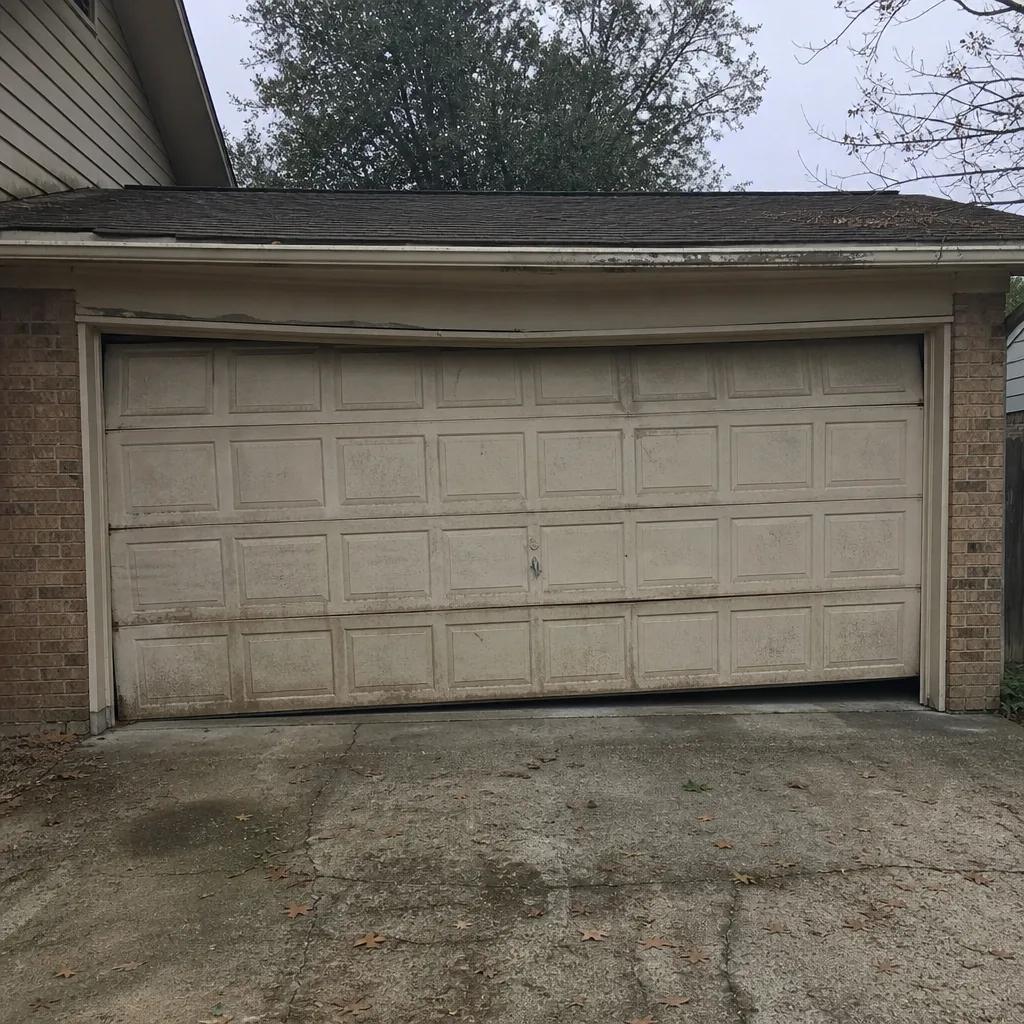 Before
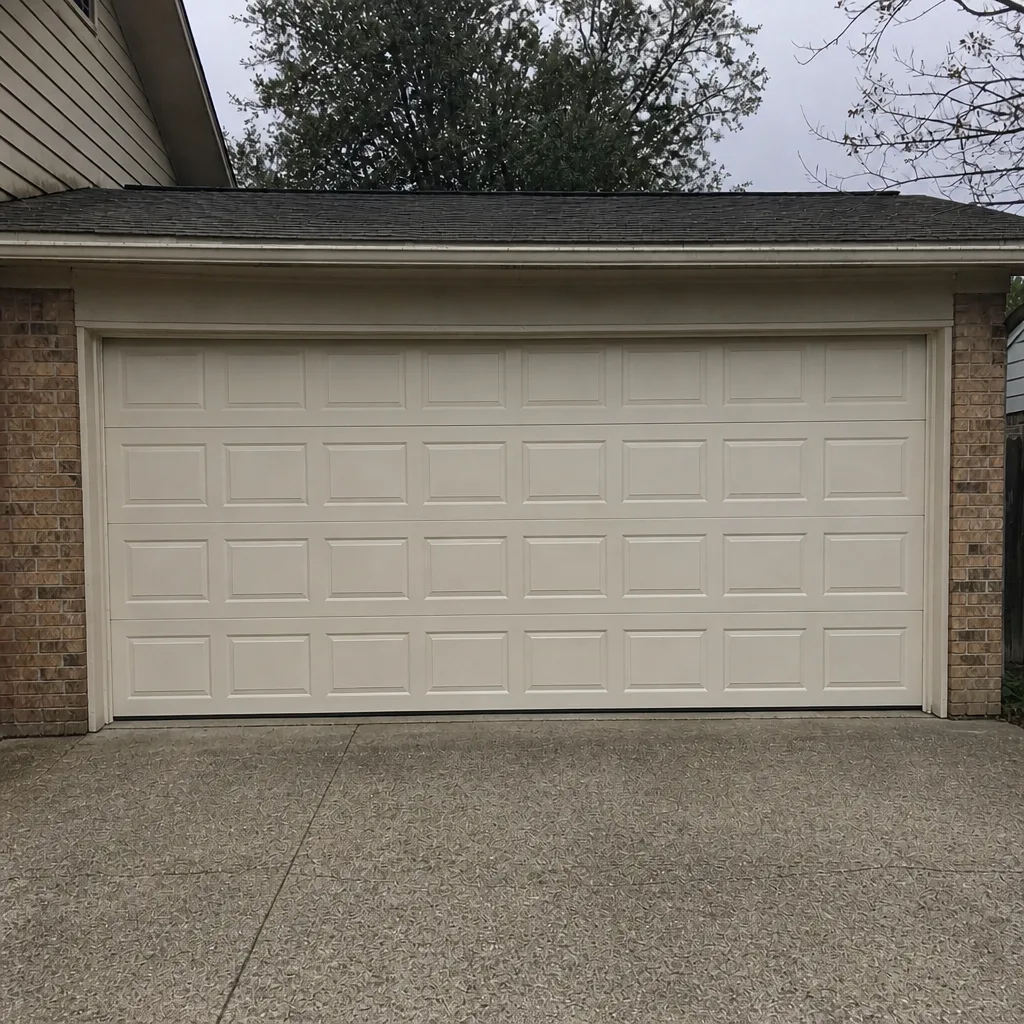 After
Common Mistakes to Avoid
- Running the door with a broken spring. This is the mistake that turns a spring replacement into a spring plus opener replacement. Every time the opener fights the full weight of the door, it works the motor and gears far beyond what they’re built for, and the extra strain can wreck the opener in short order. If the door is heavy or hangs, stop using it.
- Trying a torsion spring repair yourself. The spring holds enough energy to break an arm or worse, and homeowners die from this work. Leave it to a technician who has the winding bars and the training.
- Tightening or loosening the bottom bracket bolts. The same warning goes for cables. The bottom bracket is under extreme tension and can release without warning. Don’t touch it.
- Bypassing the safety sensors to make the door close. A door that closes without working sensors can crush something under it. Fix the sensor; never defeat it.
- Lubricating the track. This one surprises people. The track should be dry. Lubricant on the track attracts grit in Wilmington’s humid air and lets the rollers slide instead of roll, which causes the exact binding you were trying to fix. Lubricate the hinges, rollers and springs instead.
- Assuming a stuck door needs a new opener. A heavy door, a misaligned sensor or a mis-set limit all fool the opener. Diagnose the system, not just the motor, or you’ll pay for a new opener when a cheaper fix would have worked.
- Ignoring rust on the spring coils. A rust-streaked spring is a warning. Have it checked rather than waiting for it to break at a bad moment.
When to Call a Professional
Some problems are fixable at home, and some are genuinely dangerous. Call a trained professional for anything involving torsion or extension springs, lift cables, the bottom brackets, electrical wiring at the opener or sensor, or the logic board. Call immediately, and use the door as little as possible, if the door is hanging crooked, the door is too heavy to lift, you hear grinding from the opener, or the door reverses or falls. These are not cosmetic annoyances. A technician who diagnoses by system will fix the root cause in one visit rather than working through three guessing fits. Gable Garage Door Repair offers free estimates in Wilmington, so call (866) 961-8704. We answer 24/7. Fast dispatch from 7am to 7pm, Sunday through Friday.
Frequently Asked Questions
Typical Wilmington estimates run in a moderate range, with sensor and adjustment jobs at the low end, spring and cable repairs in the middle, and opener motor or full door jobs at the high end. The single biggest driver is which system failed, not the brand of door. Every job gets a written estimate before work starts, so the price is set per job. Call (866) 961-8704 for an exact quote – estimates are free.
Usually, yes. A broken spring is a same-day repair in most cases, because it’s one of the most common calls and the parts are standard. The only thing that pushes it is a nonstandard door or spring configuration. We answer 24/7 to book the visit, and can often have a technician out that day. Call (866) 961-8704.
The travel limit is set too low, so the opener thinks the door has hit an obstruction and reverses. Sometimes a safety sensor is also out of alignment. Either way it’s a quick adjustment for a technician, not a part replacement. Don’t override the opener – have it set correctly. Call (866) 961-8704 and we’ll take a look.
Our technicians are state-licensed and insured, and they work on all eight major door and opener brands. Our technicians have up to 11 years of experience, so the person who shows up knows the mechanical differences between a Clopay door and a Raynor, and between a LiftMaster and a Chamberlain opener. Call (866) 961-8704 for a free estimate from a licensed pro.
Yes. The humidity accelerates rust on springs and fraying on cables, and it can interfere with sensor electronics. A door that’s healthy in a dry climate can show rust streaks here in a few seasons. Look at the spring coils and cable ends during a wet stretch, and have anything rusted or frayed checked before it fails. Call (866) 961-8704 if you spot trouble.
No. The written estimate you agree to before work starts is the price you pay. If the technician finds something different from what you described on the phone – a second problem, or a different root cause – you’ll get a revised estimate before any additional work begins, not a surprise invoice. That’s how it works on every job. Call (866) 961-8704 for a free estimate today.
The Bottom Line
The thing that separates a cheap fix from an expensive one is diagnosis: knowing which of the five systems is actually failing. Sort by system and then by symptom, and you’ll skip the runaround. Springs and cables are technician jobs, full stop. Sensors, remotes, lubrication and light track work are things you can genuinely handle. The mistake that costs the most is running a door with a broken spring, which pushes the opener far past what it’s built for. If you ever feel unsure which system you’re looking at, get it checked before someone gets hurt. That’s the whole point of a careful diagnosis, and it’s what a technician does on every call. Gable Garage Door Repair is the multi-brand specialist that handles repair, opener repair and installation under one roof, and we’re glad to help you sort out your door.
Call (866) 961-8704 for a free estimate. We answer 24/7. Fast dispatch from 7am to 7pm, Sunday through Friday.
Written by the team at Gable Garage Door Repair.