
Last updated November 15, 2026
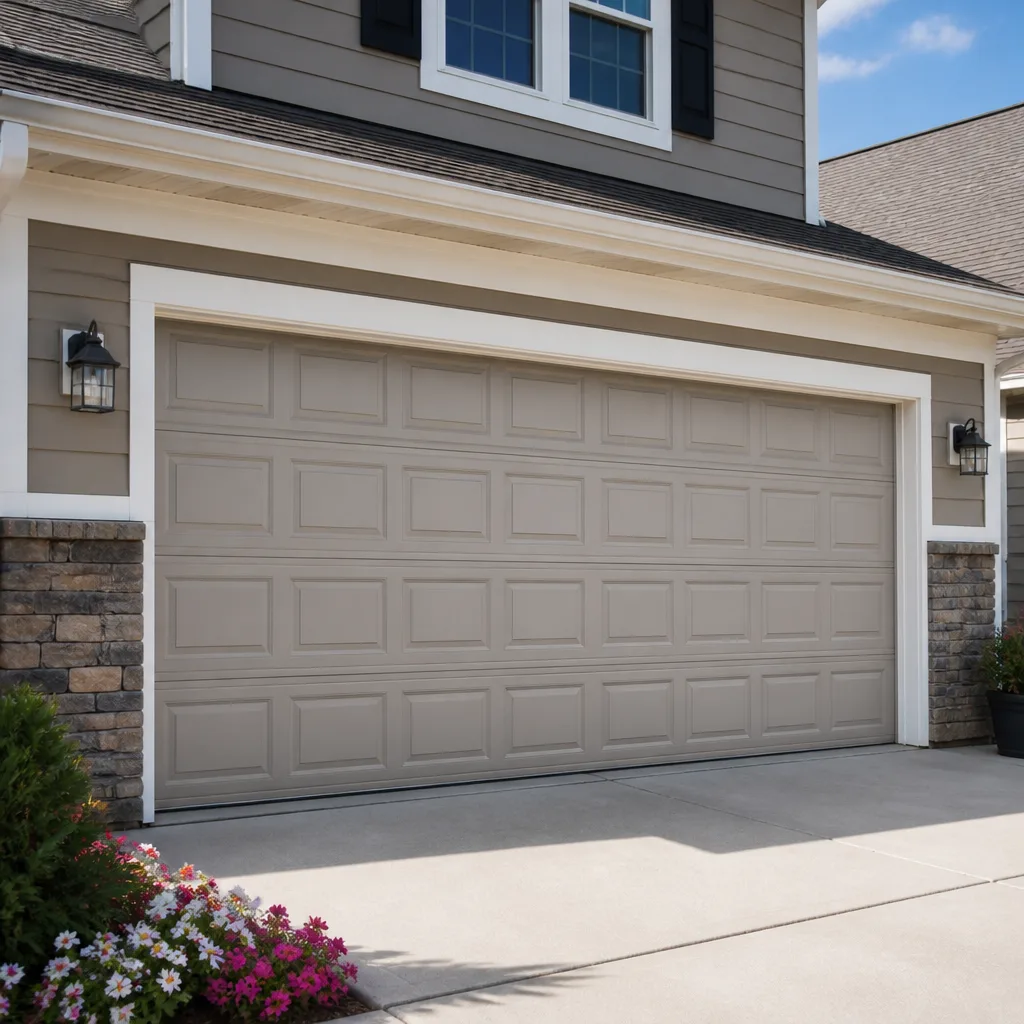 Raised-panel steel
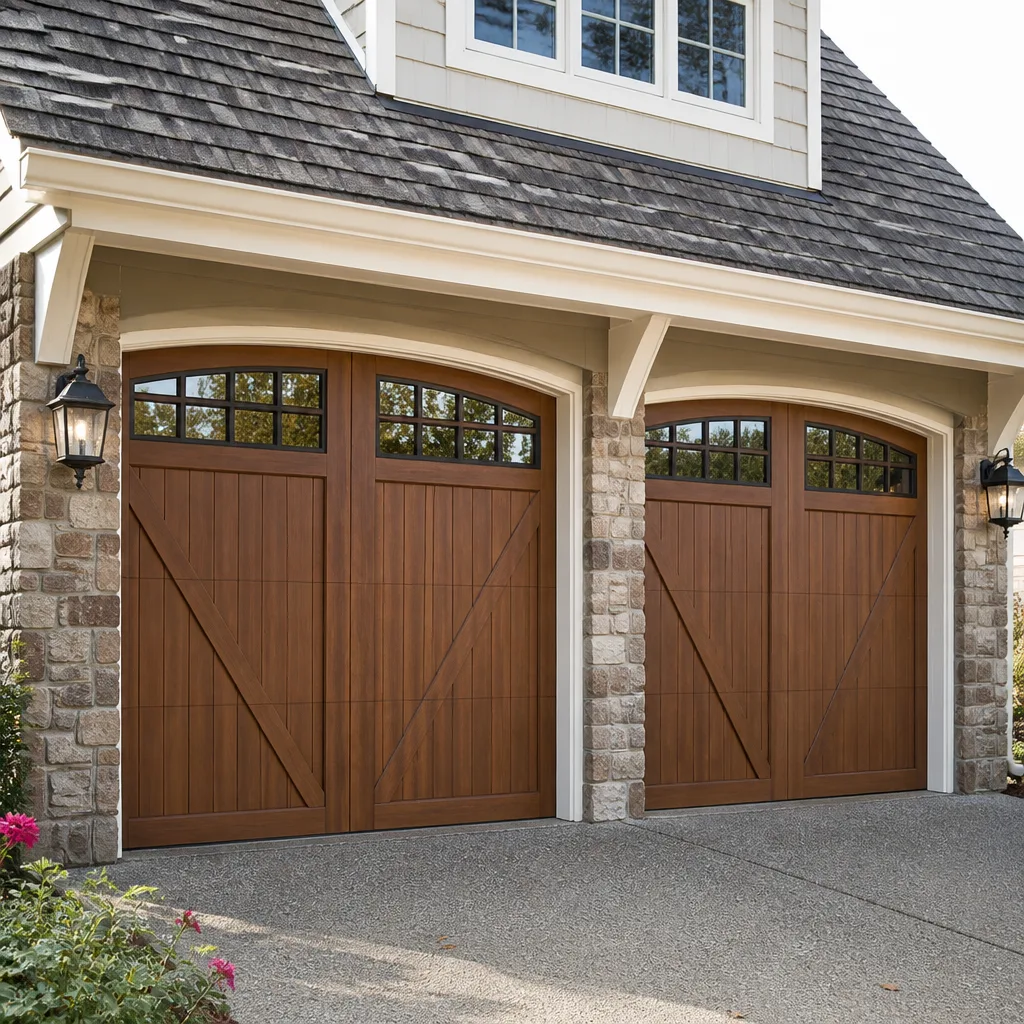 Carriage house
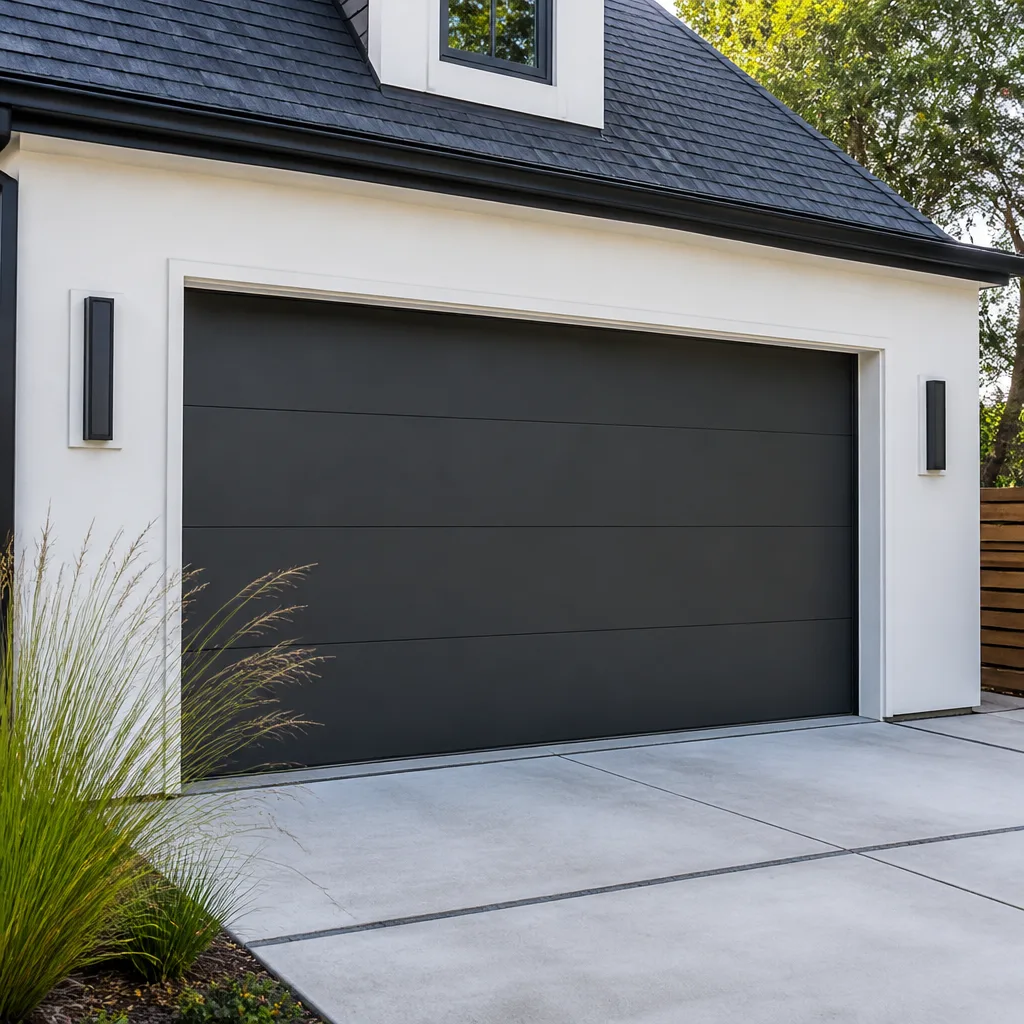 Modern flush
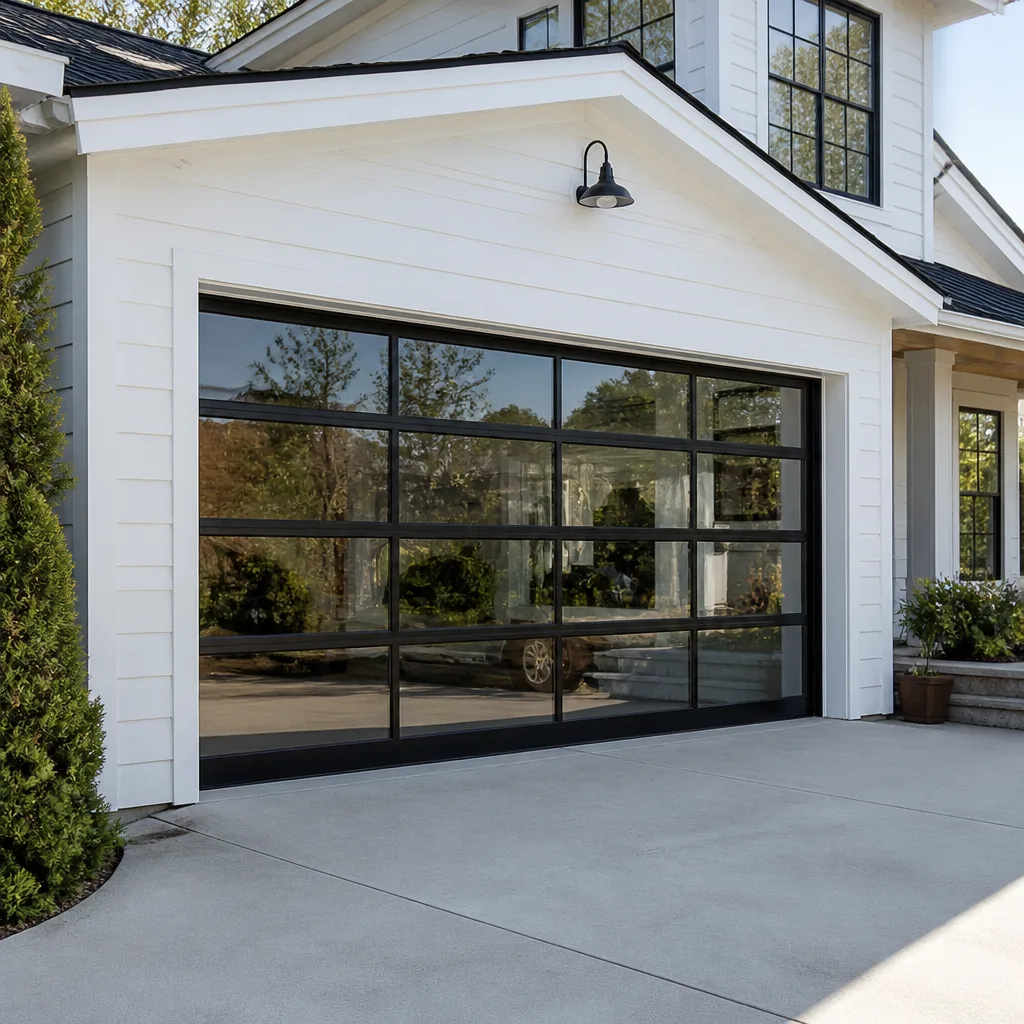 Full-view glass
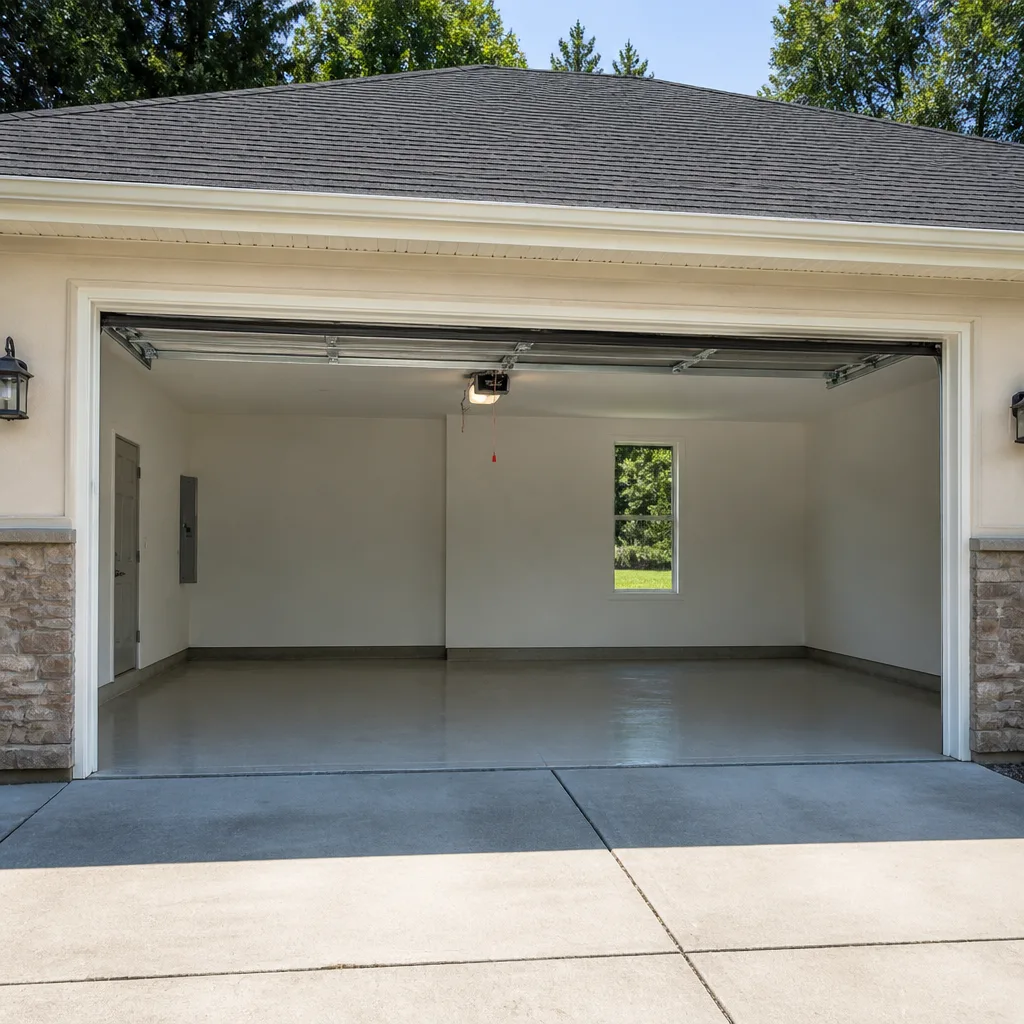 LiftMaster openers
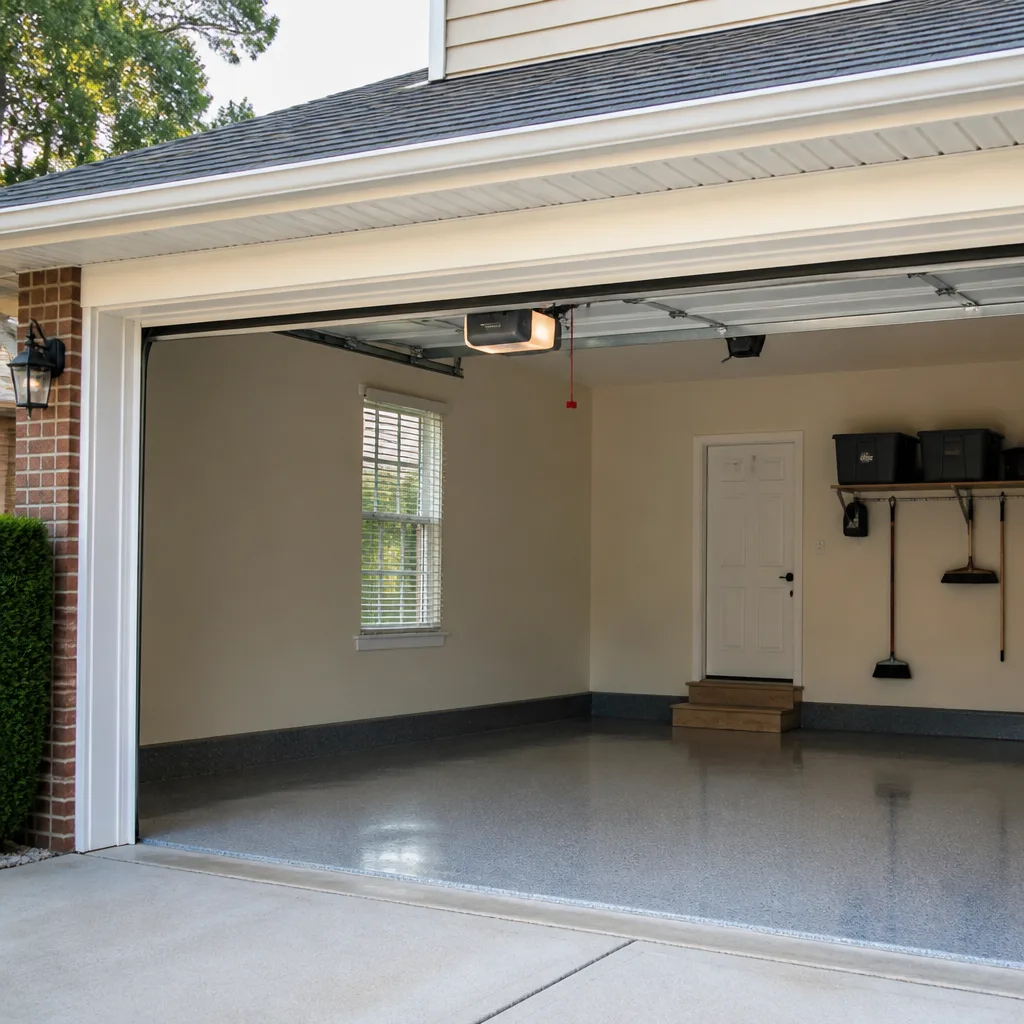 Chamberlain openers
Full 25-point door and opener safety check with every visit - springs, cables, rollers, tracks, and your LiftMaster or Chamberlain opener included
You get a price before we start. It does not change when the pro arrives.
Get your free estimateThe Complete Guide to Garage Doors in Wilmington
Most garage door buying advice is written for a generic suburb in a generic climate. That advice fails here. Wilmington’s mix of humid summers, hurricane-season wind, and older housing stock near the Cape Fear River means the door that works fine in a dry inland market can be the wrong door for a home here. The single decision that drives everything else – material – determines your opener size, your spring weight, your maintenance schedule, and how long the bottom panel lasts. This guide walks through what actually matters for a Wilmington garage door, from wind-load ratings to the two very different opening sizes you’ll find across the region.
Quick Answer
The right garage door for a Wilmington home depends on three things: the material that holds up to local humidity and wind-driven rain, a wind-load rating that matches what New Hanover County expects for your location, and an opening size that fits your specific house – which varies sharply between older bungalows inside the city and newer construction in the Leland and Ogden subdivisions. Get those three right and the opener, springs, and maintenance plan fall into place. Get them wrong and you’ll be replacing panels and hardware years sooner than you should.
Styles & brands we work with
- Raised-panel steel
- Carriage house
- Modern flush
- Full-view glass
- LiftMaster openers
- Chamberlain openers
Table of Contents
- Why Door Material Is the Decision That Drives Every Other Cost
- How Wilmington’s Climate Affects Steel, Aluminum, and Fiberglass
- Wind-Load Ratings in New Hanover County: What Most Doors Are Rated For
- Brand Availability in the Wilmington Market
- Two Opening Realities: Older Bungalows vs. Newer Subdivisions
- Matching the Opener to the Door
- A Wilmington Maintenance Calendar That Actually Fits the Climate
- Repair or Replace? How to Decide
Why Door Material Is the Decision That Drives Every Other Cost
Homeowners tend to shop for a garage door by style first and price second. That order is backwards. The material you choose sets the weight of the door, the weight of the door sets the spring size, the spring size and door weight together set the opener motor you need, and all of it together determines how much maintenance the door will demand in Wilmington’s humidity. A lighter door needs a smaller opener and lighter springs. A heavier door needs a stronger opener and heavier springs, and the panels themselves hold up differently under wind-driven rain.
Here’s how the three common residential materials stack up in this market:
- Steel is the most common choice and the most forgiving on price. Steel doors handle wind-load requirements well and are available in the widest range of styles. The weak point is the bottom panel, where water sits after a storm and where a factory finish that skips a proper primer coat will start to show it first.
- Aluminum is lighter and won’t rust, which makes it a reasonable pick for homes where weight matters or where the door sees a lot of moisture. It dents more easily than steel, so it’s less ideal on a door that faces a driveway with regular ball games.
- Fiberglass resists moisture and won’t corrode at all. It’s often chosen for the look of a wood door without the upkeep, but it can crack under impact and its finish needs attention over time in strong sun.
What matters most is the finish system, not just the base material. A steel door with a properly applied primer and a factory finish holds up far better than a cheaper door with a thin coat. When you’re comparing quotes, ask specifically about the primer and finish layers, not just the gauge of the steel. That question separates a door built for a humid climate from one built to a price. If you need work on an existing door while you decide, our garage door repair team can assess what you have and tell you honestly whether it’s worth keeping.
How Wilmington’s Climate Affects Steel, Aluminum, and Fiberglass
Wilmington’s summers bring long stretches of high humidity, and hurricane season adds wind-driven rain that pushes water into places a calm-weather door never sees. That combination is hard on the bottom panel and the hardware near the floor. A steel door that would last many years in a dry climate can show corrosion at the bottom edge much sooner here if the finish isn’t specified correctly. This is the part most buying guides skip entirely, and it’s the part that matters most for a door in this region.
What actually holds up:
- A steel door with a factory-applied primer and a baked-on finish, not a field-painted door. The primer is the layer that does the real work in humid air.
- Galvanized or coated hardware – hinges, rollers, and track – because bare steel hardware near the floor is where rust starts first.
- Adequate ventilation in the garage itself. A door that traps damp air against its interior face will fail faster than the exterior finish suggests.
- Fiberglass and aluminum where corrosion resistance matters more than dent resistance.
We’ve seen how quickly an under-specified steel door shows its age in Wilmington’s humidity, which is why we ask about finish layers before we talk about style. Our technicians have up to 11 years of experience working on doors in this kind of climate, and the pattern is consistent: the doors that last are the ones where the finish was specified for the environment, not just the ones that looked good in a showroom.
What to check on an existing door
- Look along the bottom panel and the bottom seal after a heavy rain. Standing water and any bubbling or flaking finish are early warning signs.
- Check the hinges and rollers nearest the floor for rust film.
- Run a hand along the bottom edge of the door from inside. Rough or lifting paint means moisture is getting under the finish.
- Note any water stains on the garage floor beneath the door after storms – that’s a seal problem that will shorten the door’s life.
If you find corrosion at the bottom panel, that’s a sign to get it looked at before it spreads. Our Gable Garage Door Repair team diagnoses by brand and material, not by guesswork, so you get an honest read on whether the door can be saved.
Wind-Load Ratings in New Hanover County: What Most Doors Are Rated For
Wind-load rating is the number that tells you how much wind pressure a door is designed to withstand. In a hurricane-prone region, this is not a detail – it’s the difference between a door that stays in its opening during a storm and one that becomes a liability. Most doors sold out of the box are rated for a baseline residential wind load, and in many parts of the country that’s fine. In Wilmington, it’s worth confirming exactly what rating your door carries and whether it matches what the county expects for your location.
What you need to know:
- Wind-load requirements are set by building code and can vary by location within the county. The only reliable answer for your specific address comes from the New Hanover County building department. Ask them directly what rating your opening needs.
- A door’s wind rating depends on the door, the track, the reinforcement, and the installation together – not the door panel alone. A rated door installed with inadequate reinforcement doesn’t deliver its rating.
- If you’re replacing a door, the new door’s rating should meet or exceed what your location requires. Confirm this in writing before the order is placed.
- Call the New Hanover County building department and give them your address. Ask what wind-load rating your garage door opening requires.
- Check the rating on any door you’re considering. It should be stated on the manufacturer’s documentation, not just described verbally.
- Ask the installer how the track and reinforcement will be specified to match the door’s rating.
- Confirm the permit requirements for your job with the building department before work begins – most cities require a permit for a door replacement, and the county can tell you what applies to you.
This is one of the areas where a Wilmington-specific conversation beats a generic buying guide every time. The rating that’s correct for a home here may not be the rating that ships standard. If you’re unsure what your current door is rated for, our Wilmington team can help you read the documentation and figure out where you stand.
Brand Availability in the Wilmington Market
Brand availability is a real variable in this market, and it affects your timeline as much as your budget. Some door and opener lines are stocked locally or available through local suppliers with short lead times. Others are special-order and can add weeks to a project. Knowing which is which before you commit saves you from a surprise delay, especially during hurricane season when demand for doors and repairs rises.
We work on products from eight major manufacturers – LiftMaster, Chamberlain, Genie, Clopay, Amarr, Wayne Dalton, Craftsman, and Raynor – which covers the vast majority of doors and openers in residential homes here. That matters for two reasons. First, when you’re choosing a new door, you’re comparing real options rather than whatever a single supplier happens to push. Second, when something breaks, brand familiarity means the technician recognizes the specific quirks of your hardware instead of applying generic fixes.
On the door side, Clopay and Amarr lines are widely represented in the Wilmington market, and both offer models that meet local wind-load requirements when specified correctly. On the opener side, Chamberlain and Genie are the most common systems we see in homes here. If you have a Chamberlain opener that won’t respond or a Genie that’s lost its settings, that’s a brand-specific diagnosis, not a generic one – our garage door opener repair team works on those systems specifically.
Questions worth asking about brand and availability
- Is this door model stocked locally, or is it special-order? If special-order, what’s the realistic lead time?
- Does this model come in a configuration that meets my wind-load requirement, or does it need reinforcement?
- For openers: is this model compatible with my existing door’s weight and travel?
- Are replacement parts for this brand and model readily available locally, or will future repairs depend on special orders?
One call covers the door, the opener, and everything in between, so you’re not tracking down different contractors based on what brand or problem you have.
Two Opening Realities: Older Bungalows vs. Newer Subdivisions
Wilmington has two very different garage-door realities depending on where you live, and this is something a generic guide never addresses. Inside the city, older bungalows and homes from earlier decades often have single-car openings that don’t match modern standard sizes. Out in newer subdivisions like Leland and Ogden, homes typically have wider two-car openings built to current dimensions. These aren’t small differences – they change what door you can buy, what it costs, and how the installation has to be handled.
What to expect in each case:
- Older in-city homes often have openings that are narrower or shorter than the modern standard. A door may need to be custom-sized or the opening modified. Headroom above the opening is sometimes limited, which affects the track and the opener you can use. If you’re replacing a door on an older home, measure before you shop.
- Newer subdivisions in Leland and Ogden typically have standard two-car openings built to current dimensions. Door selection is easier, and off-the-shelf sizes usually fit. The consideration shifts to wind-load rating and finish rather than fit.
- Measure the width and height of your opening at the widest and tallest points – openings are rarely perfectly square.
- Measure the headroom above the opening, from the top of the opening to the ceiling.
- Measure the side room on each side, from the opening edge to the nearest wall or obstruction.
- Note whether the garage ceiling is finished or open, and where any structural beams sit.
- Bring those measurements to your estimate so the quote reflects your actual opening, not a stock size.
Getting the measurements right at the start saves a return visit and a revised quote later. Our team measures as part of the estimate, and we’ll tell you honestly if your opening calls for a custom door or a modification.
Matching the Opener to the Door
The opener is the most common place homeowners overspend or underspend, and the reason is almost always that the opener was chosen without reference to the door. A heavier door – say a well-insulated steel door or a fiberglass door with substantial framing – needs a stronger motor than a light aluminum door. A belt-drive opener suits an attached garage where noise matters; a chain-drive opener handles heavier doors and costs less. The right answer depends on your door, not the other way around.
The mechanical relationship is simple: the door’s weight determines the spring size, and the spring and door weight together determine what the opener has to move. If the opener is undersized for the door, it works harder, wears faster, and eventually fails. If it’s oversized, you’ve paid for capacity you don’t need.
How to size an opener to your door
- Determine the door’s weight – ask the manufacturer or the installer, since this varies by material and insulation.
- Confirm the door’s balance. A properly balanced door moves with modest effort by hand; an unbalanced one strains any opener.
- Match the opener’s rated capacity to the door weight with some margin.
- Choose the drive type based on the garage’s location relative to living space (belt for quieter operation in attached garages, chain for heavier doors or detached garages).
- Confirm the opener’s safety features – the reversing mechanism and the safety sensors at the floor – are functioning before the door goes into regular use.
Electronic failures – a remote that stops working, a sensor that trips for no reason, a motor that runs but doesn’t move the door – are a different diagnostic path than mechanical failures. That’s why we handle both the mechanical side (springs, panels, tracks) and the electronic side (openers, remotes, sensors) so the root cause gets fixed, not just the symptom.
A Wilmington Maintenance Calendar That Actually Fits the Climate
Generic maintenance advice says to check your door twice a year. In Wilmington, the schedule that matters is tied to the seasons here: check before hurricane season, and check again after the humid summer to catch moisture damage before it spreads. That’s two meaningful inspection points a year, each with a different focus.
Before hurricane season
- Inspect the bottom seal and the bottom panel for corrosion or lifting finish – the storm season is when wind-driven rain will find any weakness.
- Test the door’s balance by disconnecting the opener and lifting the door halfway by hand. It should hold position without help.
- Check the track for bends or loose fasteners, and confirm the door’s wind-load reinforcement is intact.
- Test the opener’s safety reverse and the floor sensors.
After the humid summer
- Recheck the bottom panel and hardware for rust film – this is when humidity-related corrosion shows up.
- Look for water stains on the floor under the door after storms.
- Lubricate hinges, rollers, and springs with a lubricant appropriate to the hardware.
- Check the weatherstripping around the perimeter for cracks or compression.
One maintenance item needs a clear warning: garage door springs and cables are under high tension and can cause serious injury if handled by anyone who isn’t trained. Never attempt to adjust, remove, or replace a spring or cable yourself. That work belongs to a trained professional. If a spring looks stretched, broken, or out of place, stop using the door and call us.
Repair or Replace? How to Decide
The repair-versus-replace decision comes down to three questions: what’s failing, how old is the door, and how much of the door’s structure is still sound. A single broken spring on an otherwise solid door is a repair. A door with corrosion across multiple panels, a cracked section, and worn hardware is usually a replacement – patching it piece by piece costs more over time than a new door.
The questions that settle it:
- What’s actually failing? Springs, cables, and openers are repair items. Panel corrosion, structural damage, and failing finish across the whole door point toward replacement.
- Is the door still balanced and safe? A door that’s out of balance after a repair needs the repair redone, not replaced.
- Is the door’s wind-load rating still appropriate? If the door is old and its rating is below what your location now requires, replacement may be the more sensible path.
- How much would repair cost relative to replacement? When a repair bill approaches a meaningful share of a new door’s cost, replacement usually wins.
We’ll tell you honestly which makes more sense for your door, and the price is quoted and agreed before any work starts. That applies to a repair and to a full replacement – you’ll see the number in writing before anyone touches the door.
Common Mistakes to Avoid
- Choosing style before material. The door’s material determines its weight, its springs, its opener requirements, and how it holds up in Wilmington’s humidity. Pick the material first, then the style.
- Ignoring the wind-load rating. A door that doesn’t meet the rating for its location is a problem waiting for the next storm. Confirm the rating with the New Hanover County building department for your address.
- Assuming a stock size will fit. Older in-city bungalows often have non-standard openings. Measure before you shop, or you’ll order a door that doesn’t fit.
- Skipping the primer question. A cheap steel door with a thin finish will corrode at the bottom panel faster in this climate. Ask specifically about the primer and finish layers.
- Mismatching the opener to the door. An undersized opener on a heavy door wears out quickly. Size the opener to the door’s weight, not to what’s on sale.
- Trying to fix springs or cables yourself. This is the most dangerous mistake on the list. Springs are under high tension and can cause serious injury. Leave them to a trained professional.
- Waiting until hurricane season to think about the door. Check the door before the season, not during it, when demand for repairs spikes and lead times stretch.
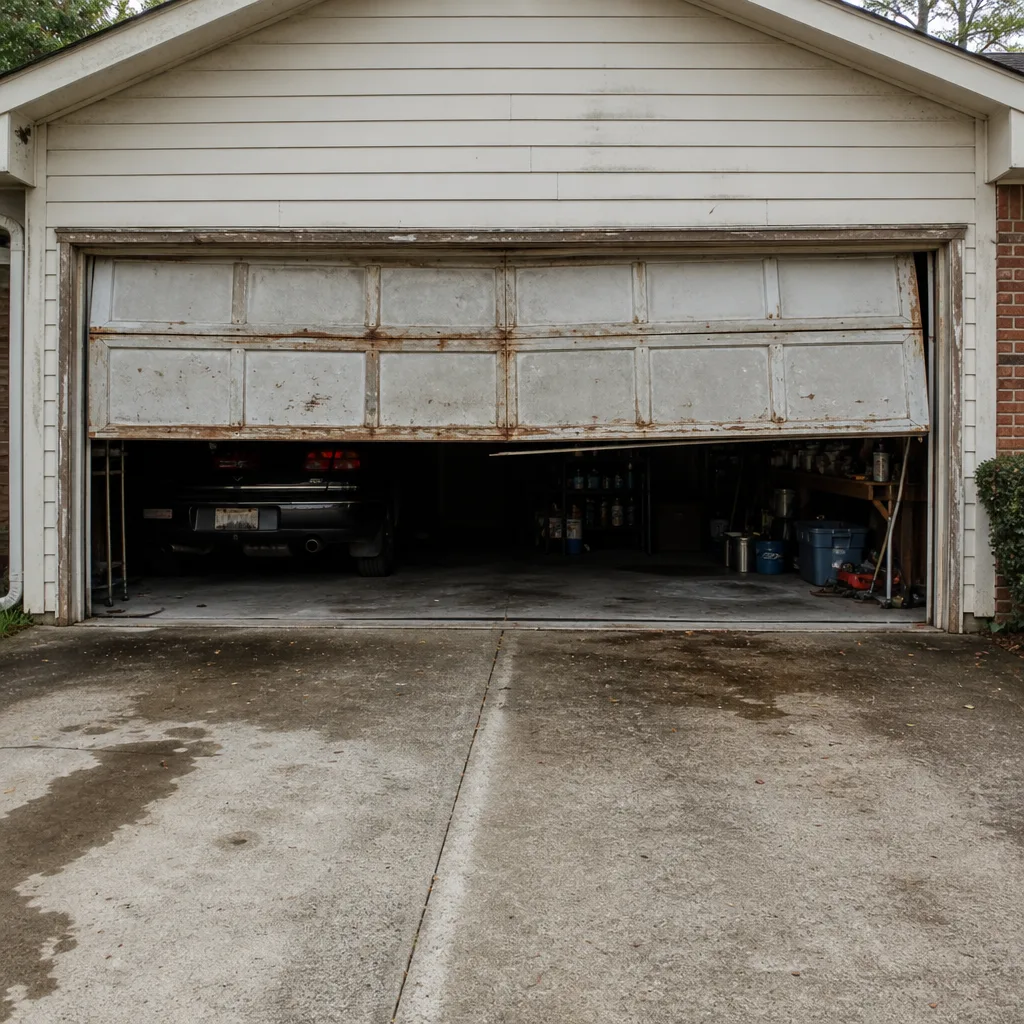
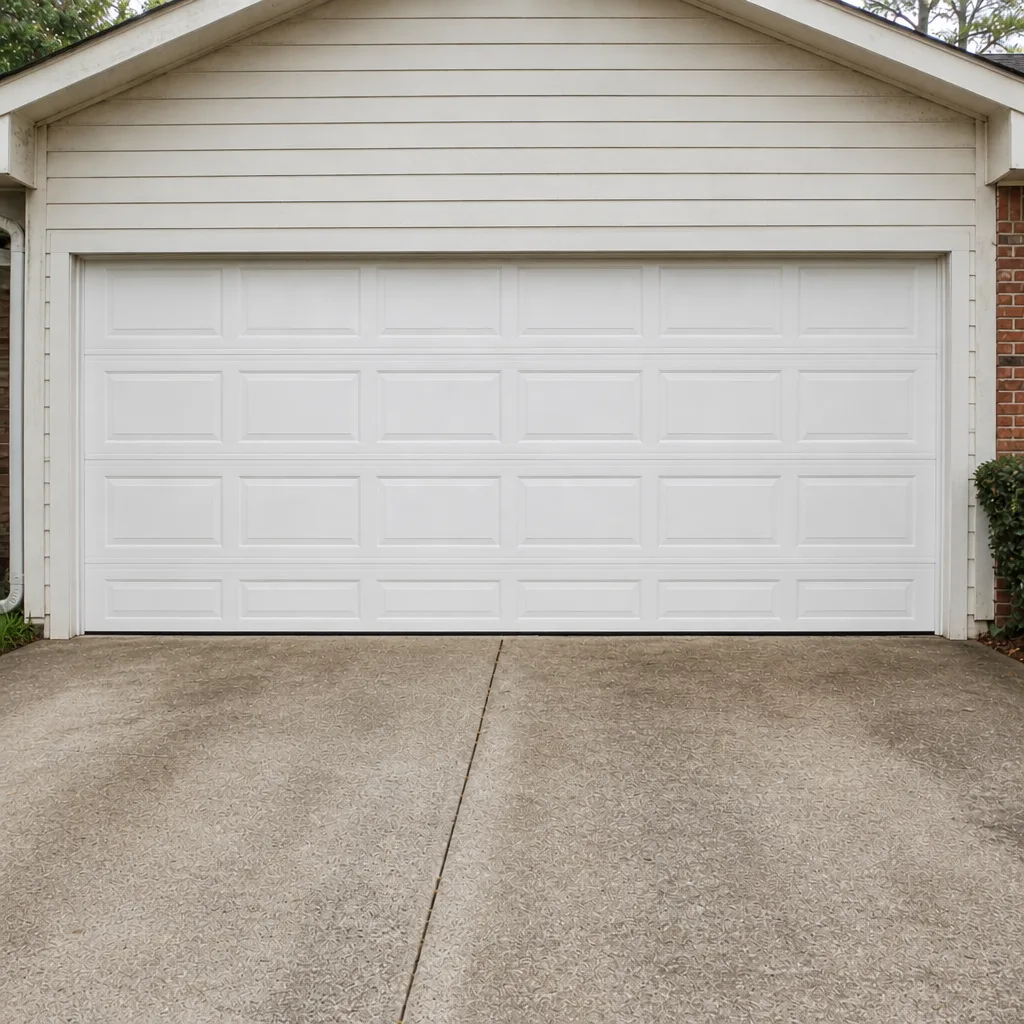
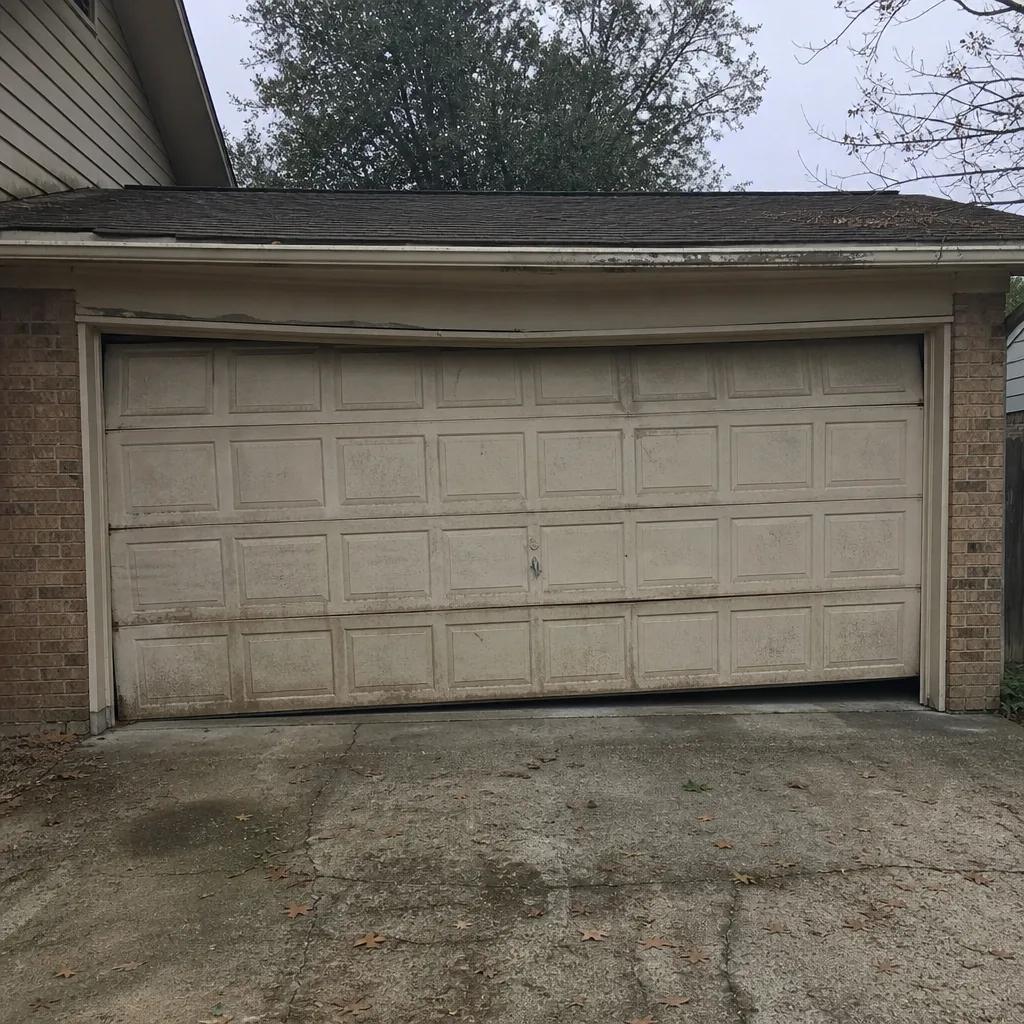
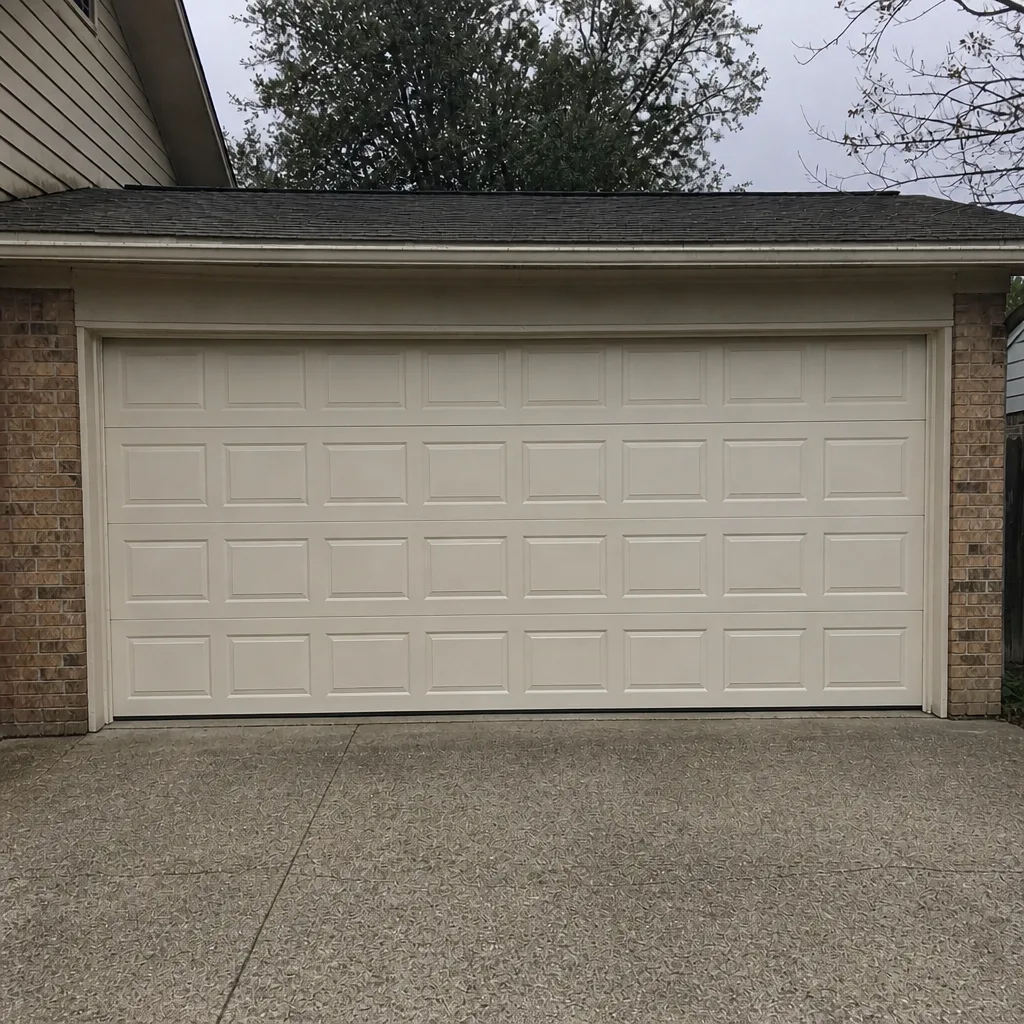
See the difference
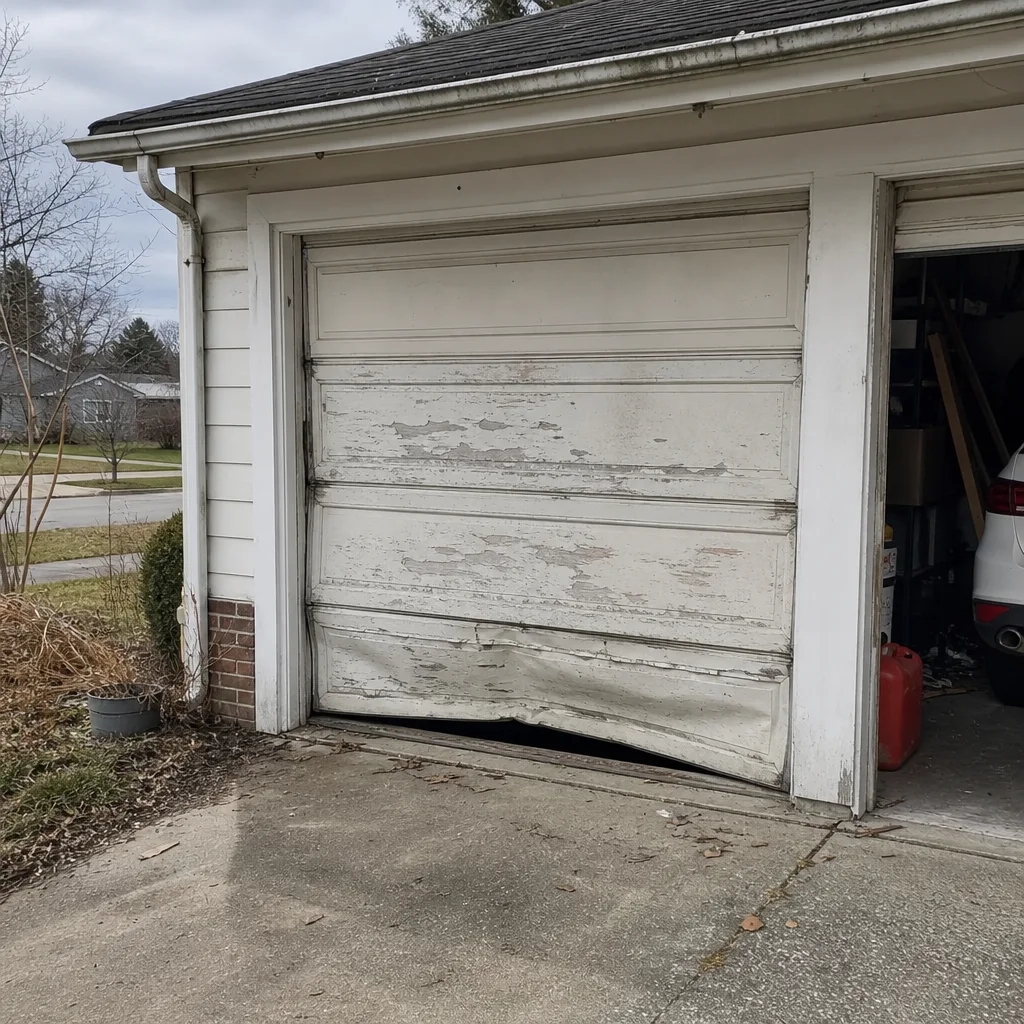 Before
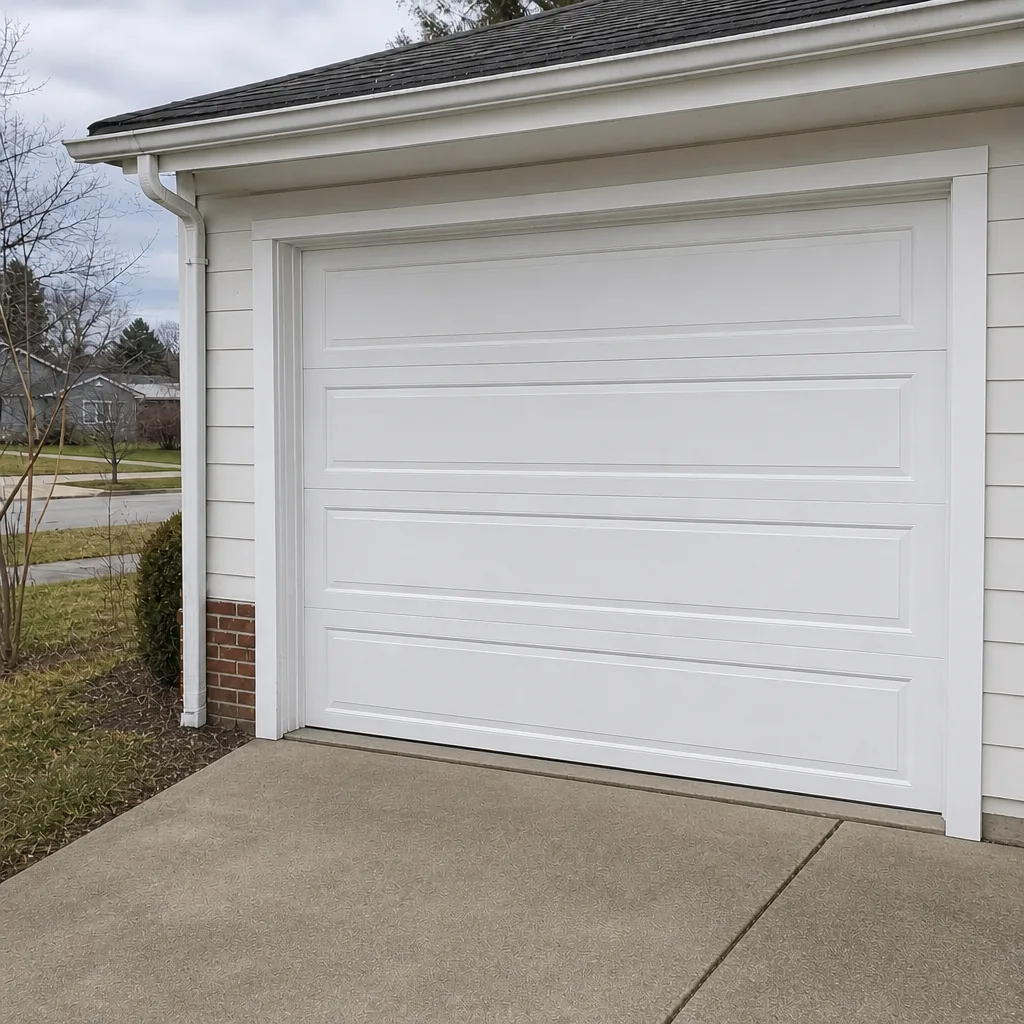 After
 Before
 After
 Before
 After
When to Call a Professional
Call a professional when the door won’t open or close smoothly, when a spring looks stretched or broken, when the door has come off its track, or when the opener runs but the door doesn’t move. Call when you find corrosion spreading across the bottom panel or water stains on the floor after storms. Call before hurricane season if you haven’t checked the door’s balance, track, and wind-load reinforcement. And call before you buy a new door – a professional measurement and a conversation about material, finish, and wind-load rating will save you from a costly mistake. Garage door springs and cables are under high tension and can cause serious injury; never attempt to adjust or replace them yourself. Gable Garage Door Repair offers free estimates in Wilmington – call (866) 961-8704. We answer 24/7. Fast dispatch from 7am to 7pm, Sunday through Friday.
Frequently Asked Questions
A garage door replacement in Wilmington is priced per job by a written estimate, because the cost depends on the door’s material, size, wind-load rating, and whether the opener needs work too. The written estimate sets the final price, and you’ll see it before any work starts. Call (866) 961-8704 for a free estimate – quotes are free.
The wind-load rating you need depends on your specific address, and the only reliable answer comes from the New Hanover County building department. Call them with your address and ask what rating your opening requires. A door’s rating also depends on how the track and reinforcement are installed, not just the door panel, so confirm the full assembly meets the requirement. Call (866) 961-8704 for a free estimate once you know your number.
A steel garage door with a proper factory primer and finish can last well in Wilmington’s humidity, while a door with a thin finish will show corrosion at the bottom panel much sooner. The finish system matters more than the steel itself. Check the bottom panel and hardware regularly, and call (866) 961-8704 if you see corrosion spreading.
Yes. We work on Chamberlain and Genie openers specifically, and we diagnose the problem by brand rather than applying a generic fix. Common issues include remotes that stop responding, sensors that trip, and motors that run without moving the door. Call (866) 961-8704 for an exact quote – estimates are free.
No – the price is quoted and agreed before any work starts, and the written estimate sets the final price. What you’re quoted is what you pay for the job as scoped. Call (866) 961-8704 for a free estimate.
We handle both. Our service covers garage door repair, opener repair, and full installation, so one call covers the door, the opener, and everything in between. We work on LiftMaster, Chamberlain, Genie, Clopay, Amarr, Wayne Dalton, Craftsman, and Raynor systems. Call (866) 961-8704 for a free estimate.
The Bottom Line
The garage door decision in Wilmington starts with material, not style. Choose steel, aluminum, or fiberglass based on how the door will hold up to humid air and wind-driven rain, then confirm the wind-load rating with the New Hanover County building department for your address. Check whether your opening is a standard size or the kind of non-standard opening common in older in-city bungalows. Match the opener to the door’s weight, and keep to a maintenance schedule built around hurricane season rather than a generic twice-a-year reminder. Every price you get should be in writing before work starts, and no one should touch a spring or cable without proper training. If you’d like help working through any of it, call (866) 961-8704 for a free estimate. We answer 24/7. Fast dispatch from 7am to 7pm, Sunday through Friday.
Written by the team at Gable Garage Door Repair.